ʿAbd al-Karim al-Khattabi: The Rif That Defeated an Empire
A judge and journalist from Morocco’s Rif mountains led his tribes to a defeat that brought down governments in Madrid; then two European states needed hundreds of thousands of troops to stop him.
Editorial board
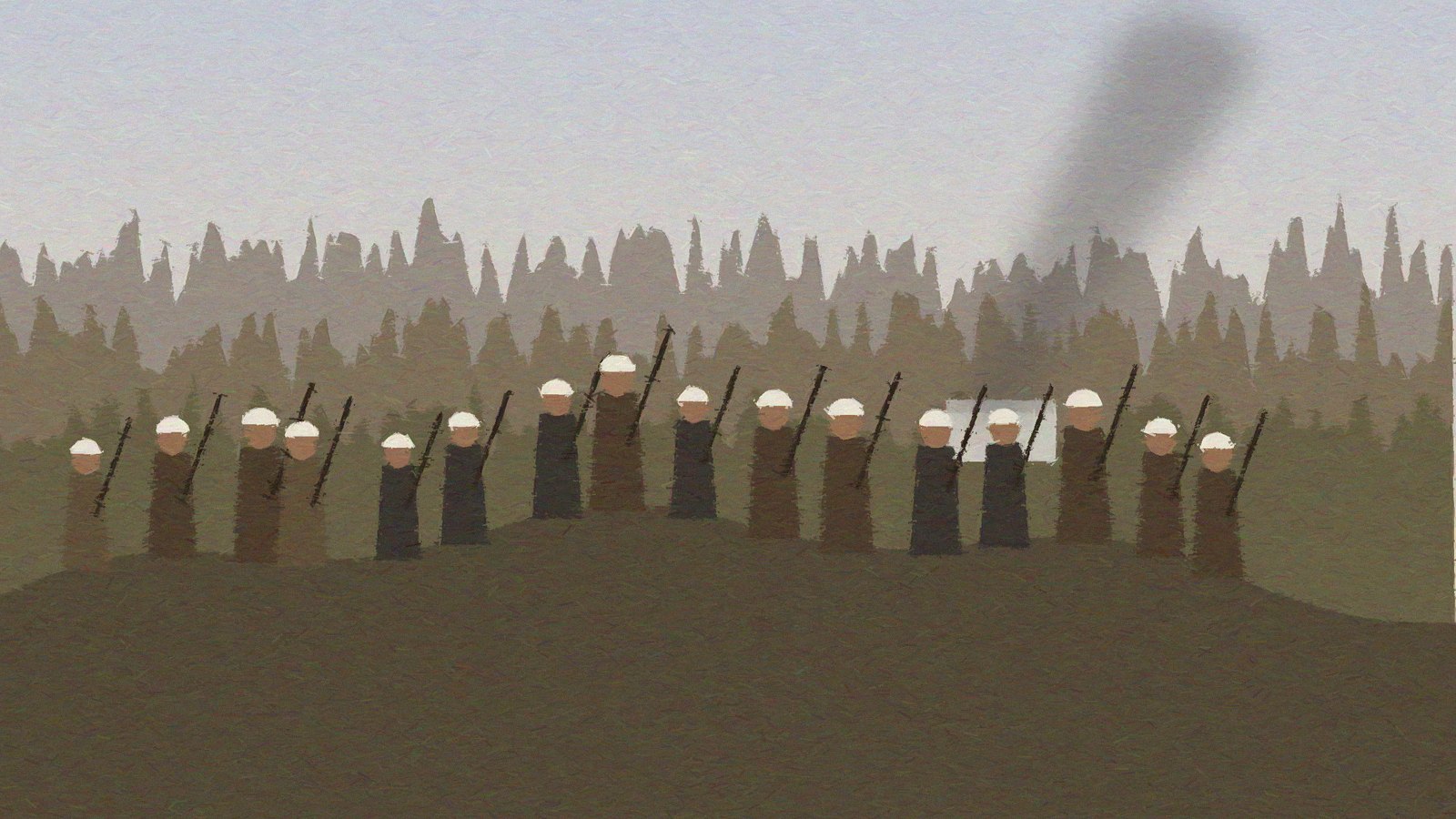
Annual, summer 1921
In the summer of 1921 the Spanish general Manuel Silvestre was advancing through the Rif mountains of northern Morocco, confident that the scattered mountain tribes could not stand against a modern European army. He had some twenty thousand soldiers under his command.
Facing him was a man who was not a soldier by origin: Muhammad ibn ʿAbd al-Karim al-Khattabi, son of a judge of the Banu Waryaghal tribe, who had studied in Fez and worked as a judge and journalist in the Spanish-held city of Melilla, and who knew the Spanish and their language well. Then he was imprisoned by them, and came out of prison to the mountains to rally the tribes.
On 22 July 1921 some three thousand Rif fighters attacked the Spanish camp at Annual. Silvestre decided to withdraw. But the withdrawal turned into collapse; soldiers fled through the mountains, and the Rifians pursued them. More than a hundred and thirty Spanish posts fell within weeks. Official Spanish figures acknowledged more than thirteen thousand dead. Silvestre’s body was never found.
The disaster shook Spain. It brought down governments and paved the way for a military coup in 1923. In the Rif, al-Khattabi proclaimed a state with its own institutions and army.
Source: Records of the Spanish parliament (the Picasso report on the Annual disaster); Sebastian Balfour, “Deadly Embrace: Morocco and the Road to the Spanish Civil War” (2002).
The Battle of Annual was one of the greatest defeats of European colonial armies in Africa. But what makes al-Khattabi’s life worth reading is not the battle alone, but what came before and after it.
﴿وَأَعِدُّوا لَهُمْ مَا اسْتَطَعْتُمْ مِنْ قُوَّةٍ وَمِنْ رِبَاطِ الْخَيْلِ تُرْهِبُونَ بِهِ عَدُوَّ اللَّهِ وَعَدُوَّكُمْ﴾[الأنفال: 60]
“And prepare against them whatever you are able of strength and of steeds of war, by which you deter the enemy of God and your enemy.” (Al-Anfal 8:60)
Knowing your adversary from within
Al-Khattabi was no mountain man cut off from the world. He had lived among the Spanish, worked in their press, and knew their administration, their army and their weaknesses. That knowledge let him see that the Spanish army in the Rif was weaker than it looked: unwilling conscripts, poorly trained, in scattered posts that were hard to supply. He chose a method that exploited that weakness: swift strikes on isolated posts, then withdrawal to the mountains. This would later be known as modern guerrilla warfare, and leaders of liberation movements studied it after him.
From resistance to state
The second point is that he did not stop at resistance. He built a nascent state in the Rif: he united feuding tribes under one leadership, set up an administration and courts, banned blood feuds between tribes, and organised an army. We saw the same in the life of Saladin: the external push first requires settling the internal contention.
When adversaries ally
But his very success summoned what defeated him. When the fighting spread into the French zone in 1925, France and Spain allied and massed hundreds of thousands of troops under the French Marshal Pétain. Spain used poison gas against Rif villages, as historians have documented. In May 1926 al-Khattabi surrendered to the French to spare his people’s blood, and was exiled to the island of Réunion in the Indian Ocean, where he remained for twenty-one years.
In 1947, while a ship was taking him to France, it stopped at Port Said, and he took refuge in Egypt. He spent the rest of his life in Cairo heading a committee for the liberation of the Maghreb, until he died in 1963, having seen Morocco, Algeria and Tunisia win their independence.
The limits of the life
Fairness requires that we mention what happened at Monte Arruit a few weeks after Annual. A besieged Spanish garrison surrendered after an agreement guaranteeing its safety; the agreement was not honoured, and some three thousand surrendered soldiers were killed. Historians differ over how far al-Khattabi was responsible for what happened, and over his ability to control the tribes in that chaos. But the episode is a reminder that legitimate pushing back does not justify everything done in its name, and that the verse commanding preparation comes in a sura that also commands keeping covenants.