So That Power Checks Power: Pushing Back in the Structure of Government
The most successful political systems are not those that abolish the struggle for power but those that turn it into an organised contest in which each power is checked by another.
Editorial board
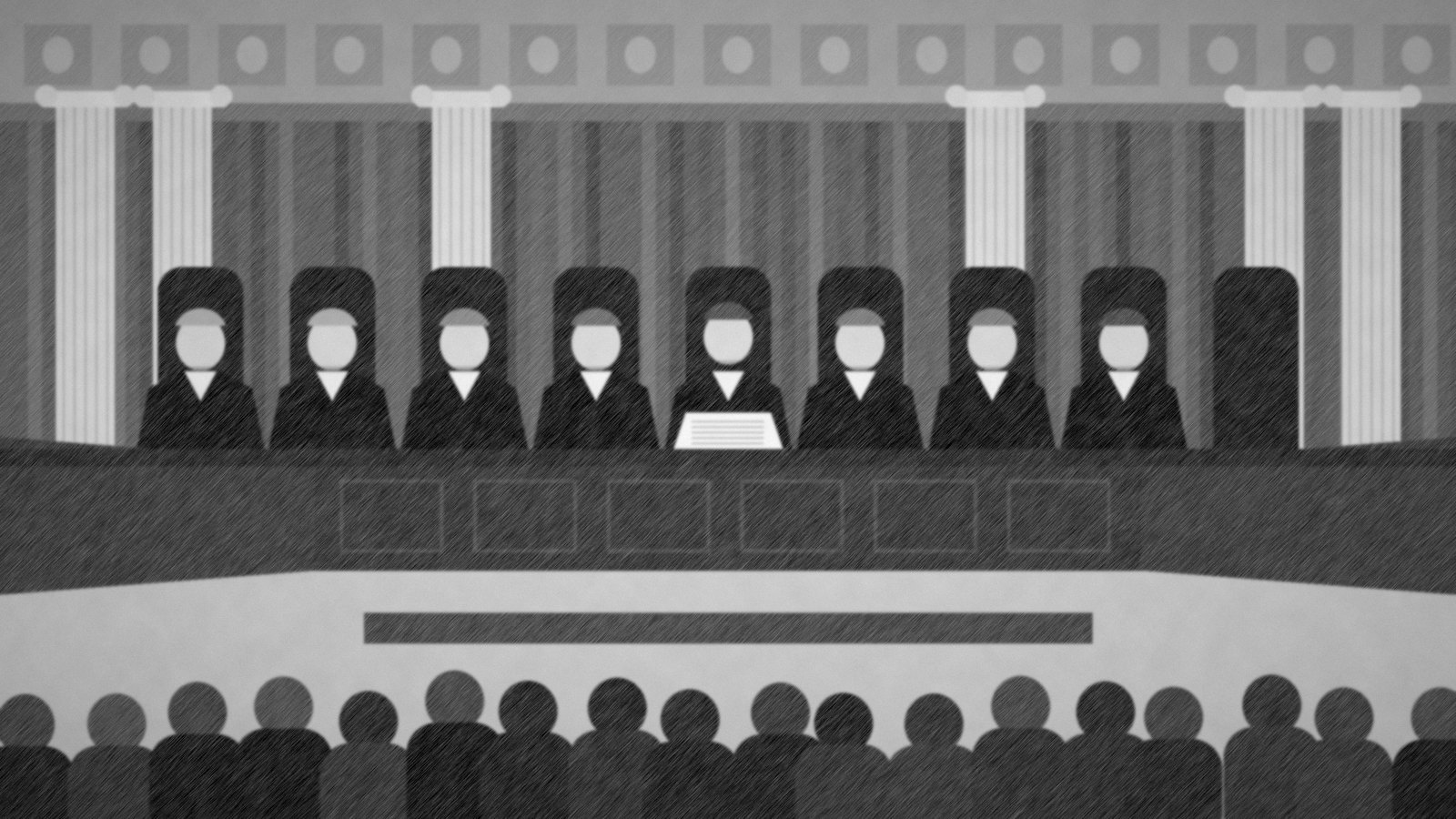
When the president’s justices ruled against the president
In the summer of 1974 President Richard Nixon was fighting his last battle. The special prosecutor in the Watergate scandal had subpoenaed audio recordings of White House conversations, and Nixon refused to hand them over, citing “executive privilege”, the president’s right to keep his deliberations confidential.
The case reached the Supreme Court. Nixon had appointed four of its nine justices, among them the Chief Justice himself, Warren Burger. One of the four, William Rehnquist, recused himself because he had previously served in Nixon’s administration.
On 24 July 1974 the ruling came down, unanimous among the eight justices: the president must hand over the tapes. The opinion was written by Burger himself, the man Nixon had chosen to lead the Court.
The tapes were handed over, and one of them revealed that Nixon had taken part in the cover-up from its first days. Sixteen days after the ruling, on 9 August 1974, the most powerful man in the world resigned.
No revolution or coup stopped Nixon. He was stopped by another power that had been designed to stop him.
Source: United States v. Nixon, 418 U.S. 683 (1974); National Constitution Center.
Power tends by nature to expand. It is not stopped by sermons or good intentions, but by another power facing it. This old observation is the heart of political pushing back, and thinkers from different civilisations have expressed it in similar terms.
Ibn Khaldun: injustice heralds the ruin of civilisation
Ibn Khaldun devoted a chapter of his Muqaddimah to the idea “that injustice heralds the ruin of civilisation”. His argument is not merely moral but causal: when the state encroaches on people’s property and work, they stop striving to earn, civilisation shrinks, and the state itself weakens. Injustice, in other words, is punished not only in the hereafter; in this world it carries the seed of its author’s fall. This is the logic of rotation: “And these days, We alternate them among the people” (Al ʿImran 3:140).
Montesquieu and Madison: pushing back as an institution
What modern political thought added was to turn this observation into institutional design. Montesquieu wrote in “The Spirit of the Laws” (1748) that, to prevent the abuse of power, things must be arranged so that “power checks power”. From this came the idea of separating legislative, executive and judicial powers.
Forty years later James Madison wrote his famous line in Federalist No. 51 (1788): “Ambition must be made to counteract ambition.” Madison did not ask for angelic rulers; he said plainly that if men were angels, no government would be necessary. What he asked for was a structure in which the ambition of each power pushes back against the ambition of the others. This is precisely the conversion of the law of pushing back from a fate that befalls us into a system that is designed.
Civil resistance: pushing back without weapons
When pushing back is shut out of institutions, it moves to the street. Here an important study by Erica Chenoweth and Maria Stephan, “Why Civil Resistance Works” (2011), comes in. The two researchers examined more than three hundred major campaigns for political change between 1900 and 2006 and found that nonviolent campaigns succeeded fully or partly in about 53% of cases, against about 26% for armed campaigns.
Their explanation is that a nonviolent campaign can mobilise far wider participation, because the cost of joining is lower, and that broad participation raises the likelihood that the regime’s supporters will defect. This meets what we set out in the foundational article: “Repel with what is better” is not only a moral principle; it may be the most effective instrument of pushing back.
Honesty, however, requires stating the limits of this finding. Chenoweth herself noted in later research that the success rate of nonviolent campaigns declined markedly in the 2010s. And the study measures success in toppling a regime or achieving a specific goal; it does not necessarily measure the stability or justice that comes afterward.
Does political contention ever end?
In 1992 Francis Fukuyama advanced the thesis of “the end of history”: that liberal democracy may be the final form in the evolution of human government. From the standpoint of the law of pushing back, every thesis about the end of history looks doubtful from the start, because it assumes that contention can settle permanently in favour of one side. The following decades showed that history did not end, and that the model that seemed victorious now faces challenges from within and without.
The conclusion is that the wisest systems are those that acknowledge that the struggle for power never goes away, and so organise it rather than deny it. The most dangerous are those that claim to have ended it, because in doing so they disable the pushing back that prevents corruption.