When the Voice That Pushes Back Is Silenced From Within
Institutions do not always fall to a blow from outside. Often they fall because they silenced the voice inside that was pushing them back from error.
Dr. Tarek Abou Ghazala, Editor-in-chief
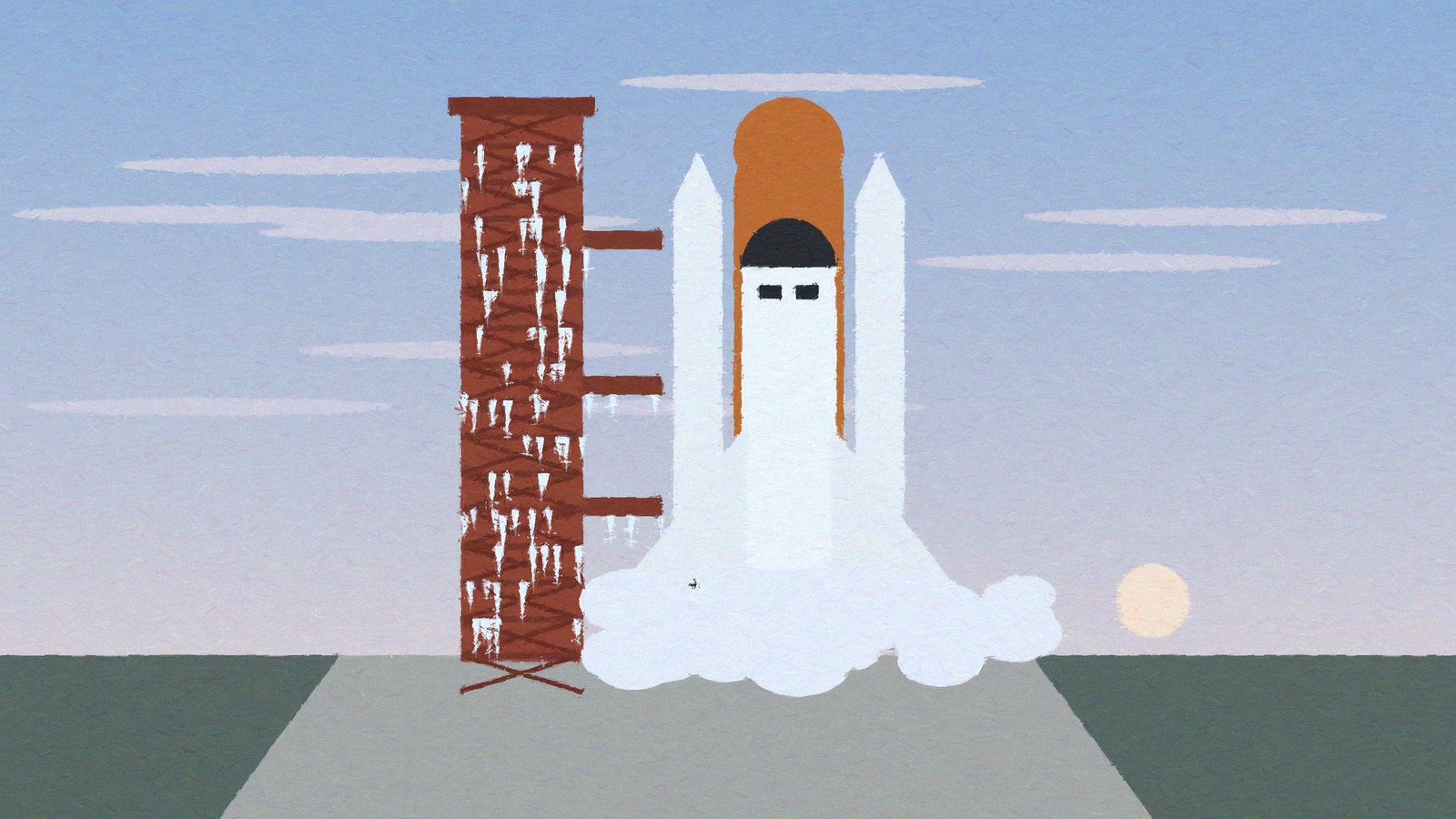
A cold night in Florida
In the summer of 1985 an engineer at Morton Thiokol named Roger Boisjoly wrote a memo to his superiors. The company made the solid rocket boosters for the American space shuttle, and Boisjoly had examined a booster recovered from an earlier flight and found that the rubber O-rings that sealed hot gas between its segments had partly burned through. He warned in his memo that if the problem continued it could lead to “a catastrophe of the highest order”.
On the evening of 27 January 1986, the eve of the launch of the shuttle Challenger, forecasters expected a night when temperatures would fall below freezing. Boisjoly and his colleagues knew that the rubber stiffens in the cold and fails to seal, and they recommended delaying the launch. Their company’s management at first agreed.
But NASA officials pushed back in a long teleconference. The company’s managers went off by themselves, away from the engineers, and one of them told the head of engineering a line that became famous: “Take off your engineering hat and put on your management hat.” Then they came back to say the data were inconclusive.
On the morning of 28 January the shuttle lifted off with ice hanging from the launch tower. Seventy-three seconds later it broke apart in the sky, killing its seven crew members, among them a teacher who was to have been the first schoolteacher in space.
There was someone in the room who knew. But his voice did not have enough weight to push back the decision.
Source: Report of the Presidential Commission on the Space Shuttle Challenger Accident (Rogers Commission, 1986); Roger Boisjoly papers, Chapman University.
In the first issue we read pushing back between opposing forces: producer and producer, state and state, power and power. We open this issue with another face of the law that is often overlooked: pushing back within a single community. An institution, like a society, needs someone to push it back from error from the inside; otherwise reality pushes it back from outside, at a far heavier price.
﴿وَلْتَكُنْ مِنْكُمْ أُمَّةٌ يَدْعُونَ إِلَى الْخَيْرِ وَيَأْمُرُونَ بِالْمَعْرُوفِ وَيَنْهَوْنَ عَنِ الْمُنْكَرِ ۚ وَأُولَٰئِكَ هُمُ الْمُفْلِحُونَ﴾[آل عمران: 104]
“Let there be among you a community calling to good, enjoining what is right and forbidding what is wrong; it is they who will prosper.” (Al ʿImran 3:104)
The verse is not content for there to be individuals in the community who know what is right; it asks for an “umma”, an organised group with a function. The difference is essential. Boisjoly knew, but he was one person facing a structure designed to keep to its schedule. Knowledge alone does not push back; knowledge pushes back when it has a place and a weight in the decision.
How the inner voice is silenced
In her book on the Challenger launch decision (1996), the American sociologist Diane Vaughan studied what she called “the normalisation of deviance”. The O-ring problem was no surprise; it had appeared on earlier flights. But every flight that succeeded in spite of it made the danger seem smaller, until the exception became an accepted rule. Earlier, in 1972, the psychologist Irving Janis had described what he called “groupthink”: when a group cares more about consensus than about being right, it presses the dissenter until he falls silent or doubts himself.
Together the two mechanisms disable internal pushing back. The first weakens the argument through habit; the second weakens its holder through pressure. The result is an institution that looks cohesive but has lost the immune system that protects it from its own mistakes.
Institutions that learned
By contrast, some professions have learned to design internal pushing back into their structure. In civil aviation, first officers are now trained to challenge their captains in specific forms of words, after earlier accidents revealed that co-pilots had seen the error and said nothing. In medicine, the New England Journal of Medicine published a study in 2009 of the World Health Organization’s surgical safety checklist, applied in eight hospitals around the world: deaths after surgery fell from 1.5% to 0.8%. A central part of the checklist is that the whole team stops before the incision, and each member, from the nurse to the anaesthetist, is given an announced opportunity to say that something is not right.
A simple checklist offers no new science. But it gives the weakest voice in the room an institutional place. That is exactly what Boisjoly lacked.
In this issue
The second issue follows the method of the first: a true story at the head of each article, then a reading of it through the law of pushing back. We read the Treaty of Hudaybiyya as pushing back without fighting; the Montgomery bus boycott as organised social pushing back; the 1973 oil embargo as economic pushing back that the pushed answered with a counter-push; the launch of Sputnik as a technological shock that created the internet; Magna Carta as a lesson that texts do not protect themselves; a single vote in Virginia that decided who controlled a legislature; and the Battle of ʿAyn Jalut, which halted the Mongol advance.
Through all of it runs one question: when is pushing back reform, and when is it silenced, so that silence turns into corruption?