Peace Is Pushing Back Too: A Reading of Hudaybiyya
Not every push is a confrontation. Sometimes the strongest push is to move the conflict from a field where your adversary excels to one where you do.
Editorial board
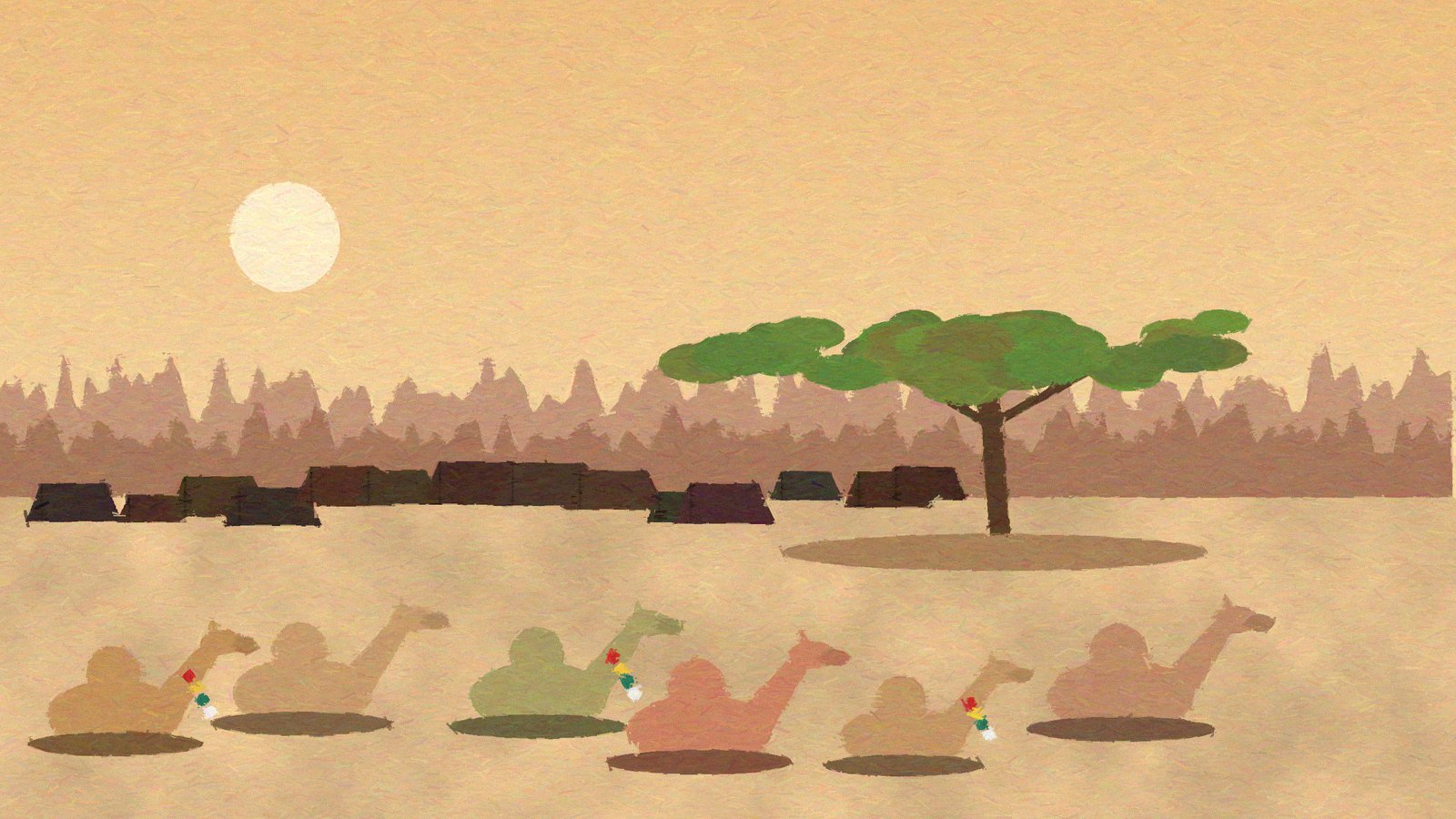
Terms that looked like defeat
In the month of Dhu al-Qaʿda in the sixth year after the Hijra, the Prophet, peace be upon him, set out from Medina with some fifteen hundred of his companions to perform the lesser pilgrimage. They drove garlanded sacrificial animals with them so that people would know they had not come to fight. When they reached Hudaybiyya on the outskirts of Mecca, Quraysh barred them from entering.
Envoys went back and forth between the two sides, and in the end a truce was agreed. Its terms looked harsh: the Muslims would return that year without performing the pilgrimage and come back the following year for three days; anyone from Quraysh who came to the Muslims as a Muslim would be sent back, while anyone from the Muslims who went over to Quraysh would not be returned; and there would be a truce between the two sides for ten years.
This weighed heavily on many of the companions, until ʿUmar ibn al-Khattab came asking: are we not in the right and they in the wrong? Why then should we accept humiliation in our religion? Then, on the way home, the Sura of Victory was revealed: “Indeed, We have granted you a clear opening.”
Ibn Ishaq reported from al-Zuhri that there had been no greater victory in Islam before it. When war laid down its burdens and people felt safe, they mixed and talked with one another, and in the two years that followed as many entered Islam as had been in it before, or more. The evidence: they went to Hudaybiyya fifteen hundred strong, and two years later they marched on Mecca ten thousand strong.
When Quraysh broke the treaty by helping their allies against the Muslims’ allies, the Prophet entered Mecca in the eighth year with hardly any fighting, and told its people: go, you are free.
Source: Sahih al-Bukhari, Book of Conditions; Sirat Ibn Hisham. The words “Go, you are free” are well known in the sira literature, though hadith scholars have discussed their chain of transmission.
In the first issue we established that pushing back is displacement, not annihilation, and that its instrument varies while its function stays constant. Hudaybiyya offers the clearest evidence of this in the life of the Prophet: a push that reached its goal without a battle, through concessions that looked to its own side like defeat.
﴿إِنَّا فَتَحْنَا لَكَ فَتْحًا مُبِينًا﴾[الفتح: 1]
“Indeed, We have granted you a clear opening.” (Al-Fath 48:1)
The Quran called the truce an “opening”, a victory, before anything had been opened. What concerns us here is that the victory was not in the text of the agreement but in the new field the agreement opened.
Moving the conflict to another field
Quraysh was stronger in the field of arms, wealth and position. In the field of argument, preaching and contact between people, the Muslims were stronger. Permanent war kept the conflict in the first field, because it cut the roads and kept people from mixing. The truce moved the contention into the second field. Pushing back did not stop; its instrument changed.
This is a lesson that goes beyond history. The weaker side in a given field does not push back well if it insists on fighting in that very field. Wisdom lies in asking: where am I stronger, and how do I make the conflict take place there?
Gains no one counted on
The truce produced what neither side expected. The condition requiring that anyone who came from Mecca as a Muslim be sent back looked like the most unjust of the terms. But one of those sent back, Abu Basir, fled to the seacoast, where some seventy others with nowhere to go joined him, and they began intercepting Quraysh’s caravans to Syria. In the end Quraysh itself asked for the cancellation of the condition it had imposed. Once pushing back begins it generates dynamics that no one controls, and whoever reads the text on the day it is signed cannot judge it well.
When is a truce pushing back, and when is it surrender?
This should not be read as unqualified praise for every concession. The difference between a truce that pushes back and a truce that surrenders is fine and decisive. From Hudaybiyya we draw three conditions. First, the truce did not touch the fundamentals: the Muslims gave up neither their religion nor their city, only one year’s pilgrimage and a procedural condition. Second, it was concluded from a position of strength: they had come in no small number, and the companions had pledged beneath the tree to stand firm when they believed ʿUthman had been killed. Third, it opened a field in which its makers excelled, and closed no field that was theirs.
With these three conditions we can weigh any truce or settlement: does it touch the fundamentals? Is it concluded from a position of strength? And to which field does it move the conflict? If the answers are right, the truce is pushing back even if it looks like retreat. If they are not, it is retreat even if it is called peace.