The Parchment That Cannot Protect Itself: The Lesson of Magna Carta
Written rights do not live by their ink. They live as long as there is a force behind them able to push back whoever wants to tear them up.
Editorial board
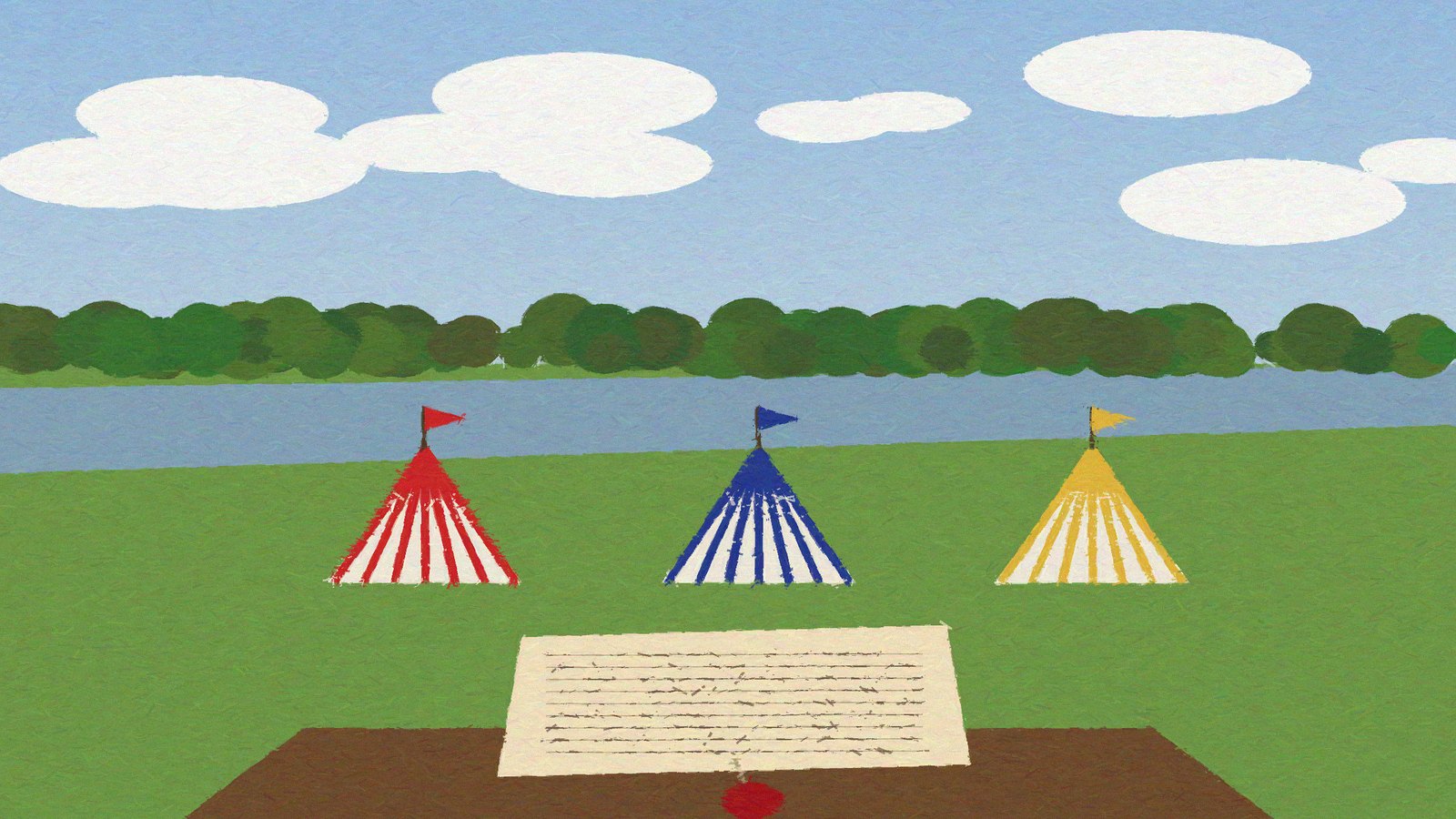
A meadow on the banks of the Thames
In the spring of 1215 King John of England was at his lowest. He had lost most of his family’s lands in France, his latest war there had ended in heavy defeat, and he had loaded the barons with taxes to pay for his wars. A number of them rebelled and marched until they entered London.
On 15 June 1215, in a green meadow on the banks of the Thames called Runnymede, the king sealed a document drafted by the barons with the help of the Archbishop of Canterbury. It contained a clause that became one of the most famous in the history of law: no free man shall be seized, imprisoned, stripped of his property or exiled except by the lawful judgment of his peers or by the law of the land. To no one will we sell, to no one deny or delay, right or justice.
But the charter lived only a few weeks. In August of the same year Pope Innocent III declared it “null and void of all validity for ever”, and civil war broke out again.
Then King John died the following year. The regents of his young son reissued the charter in 1216, then 1217, then 1225, each time in a revised form, and each time because the crown needed the barons’ consent. Three of its clauses remain in force in the law of England and Wales to this day.
Source: The British Library; The National Archives (UK).
Magna Carta is usually presented as the birth of the rule of law. But its real story says something more precise and more useful: the charter itself died within weeks. What revived it was not its text but the balance of power that kept forcing its reissue.
﴿وَإِذَا حَكَمْتُمْ بَيْنَ النَّاسِ أَنْ تَحْكُمُوا بِالْعَدْلِ﴾[النساء: 58]
“And when you judge between people, judge with justice.” (Al-Nisaʾ 4:58)
Parchment barriers
Nearly six centuries later, James Madison wrote in Federalist No. 48 that marking the boundaries of powers on paper is not enough to protect them, and called such written limits “parchment barriers”. That explains what happened at Runnymede. The king sealed the charter because the barons were in London. When he thought he could be rid of it, he was rid of it. It came back only when the crown again needed the barons.
This is a law every constitutional experience knows. How many constitutions, written in the finest language, stopped their rulers from nothing, because no one was able to push back when the ruler violated them. And how many systems without a single written constitution, Britain itself among them, have kept rights secure because their balance of power keeps them.
Why the text still matters
That does not mean the text is worthless. Magna Carta, despite its first death, became a reference to which everyone who later wanted to push back against royal power returned. English parliamentarians invoked it in their struggle with the kings in the seventeenth century, and the framers of the American Constitution and Bill of Rights drew on it. The text does not push back by itself, but it gives those who do a shared language and a legitimacy to appeal to. It is a tool in the hand of power, not a substitute for it.
Justice between text and power
The verse at the head of this article joins the two. It commands justice: it is a normative text. But it addresses “those who judge”, those who hold power. Justice in the Quranic conception is not a slogan to be hung on a wall but a charge on whoever holds authority, and a responsibility on the community to set him right if he strays from it.
The conclusion for everyone who writes constitutions or defends them: do not ask only what the text says; ask who will push back on its behalf on the day it is violated, and with what instrument.