The Sputnik Shock: How Fear Built the Internet
The greatest technological leaps were not always born of curiosity, but of the feeling that the adversary had got there first.
Editorial board
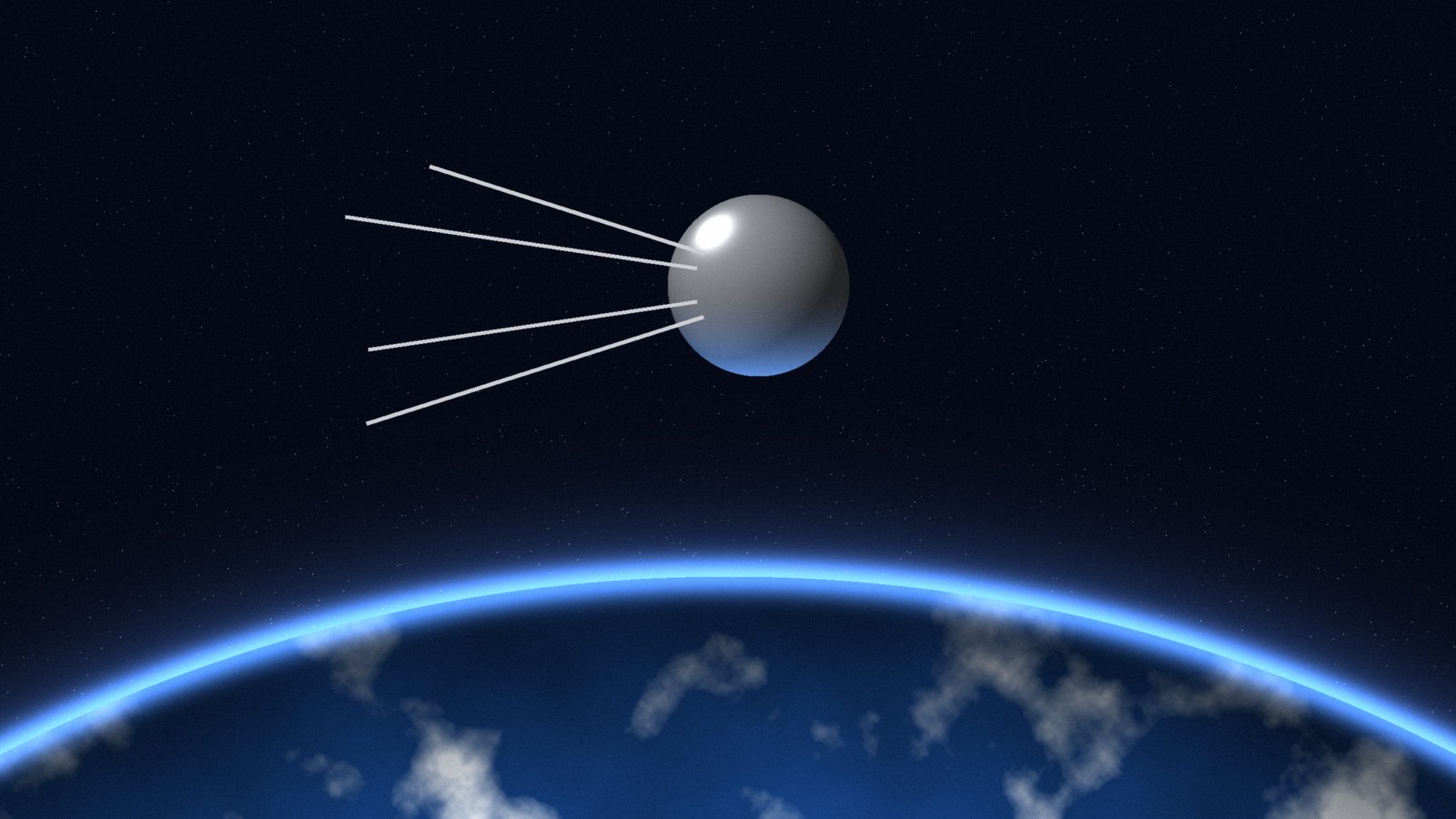
“Beep… beep” over American heads
On 4 October 1957 the Soviet Union launched a shiny metal sphere no more than fifty-eight centimetres across, with four long antennas trailing from it. It was called Sputnik, “fellow traveller”. It was the first artificial satellite to orbit the Earth.
It carried no weapon and no camera. It sent a simple radio signal, “beep… beep”, that any radio amateur could pick up. But the Americans who heard it, or saw its glint crossing the night sky, understood its message: the rocket that had carried this sphere into orbit could carry a nuclear warhead to any American city.
The shock deepened when the first American attempt to respond, on 6 December 1957, ended with the rocket exploding on the launch pad in front of television cameras. The press called the failed American satellite “Flopnik”.
But the real response came through institutions. In February 1958 the Department of Defense created the Advanced Research Projects Agency, ARPA. In July NASA was established. In September the National Defense Education Act was passed, pouring billions of dollars into teaching science, mathematics and languages.
Eleven years later, on 29 October 1969, the first message was sent between two computers on a network funded by ARPA itself, between the University of California, Los Angeles and the Stanford Research Institute. The network was called ARPANET. From it the internet was born.
Source: NASA History Office; DARPA; Computer History Museum.
History rarely offers a clearer example that pushing back rouses the one who is pushed, and that the rousing can go far beyond its first purpose. The Americans wanted to catch up with the Soviets in rockets, and ended up building the infrastructure on which the entire digital world rests.
﴿يَا مَعْشَرَ الْجِنِّ وَالْإِنْسِ إِنِ اسْتَطَعْتُمْ أَنْ تَنْفُذُوا مِنْ أَقْطَارِ السَّمَاوَاتِ وَالْأَرْضِ فَانْفُذُوا ۚ لَا تَنْفُذُونَ إِلَّا بِسُلْطَانٍ﴾[الرحمن: 33]
“O company of jinn and mankind, if you are able to pass beyond the regions of the heavens and the earth, then pass; you will not pass except by authority.” (Al-Rahman 55:33)
The commentators hold several views on “sultan”, authority, the best known being proof and power. Some modern readers like to read it as science and technology. We do not need to attach the verse to any particular discovery to draw a general meaning from it: passing through the universe comes only through a power that is built and acquired.
Answering with institutions, not slogans
What is striking about the American response is not the amount of money alone but its kind. It was not spent only on more rockets but on three institutions: a civilian space agency, a military agency for long-range research with flexible powers, and a national education programme reaching schools and universities. The response, in other words, targeted the capacity to produce science, not a single scientific result.
Here is a lesson for every society that receives a shock exposing its backwardness. The first response is usually emotional: anger, denial or a search for someone to blame. The response that truly pushes back is slow and dull: schools, laboratories and patient funding for research whose destination no one knows in advance.
Side effects greater than the original
The internet was not the only unintended outcome. Research from that era, military in origin, contributed to technologies that became part of everyday life, such as satellite positioning, which began as a military project and was later opened to civilian use. This is what the verse of iron, which we read in the first issue, points to: in a single tool there is might and benefit, and the question is always where it is directed.
Will the scene repeat?
Many today speak of a new “Sputnik moment” in the race for artificial intelligence and chips among the great powers. The comparison is useful as long as it does not make us forget the difference. In 1957 the two sides were states that monopolised advanced research. Today much of that research is in the hands of private companies that cross borders. That makes technological contention more complex: not only between two states, but between states and companies, and among the companies themselves.
The lasting lesson of Sputnik is that a shock makes nothing by itself. What makes things is the response. Many nations have received similar shocks and produced nothing but speeches.