Lives, Not Statues
In this issue we read the lives of men and women who pushed back against what they saw as injustice or error. Not to make statues of them, but to understand how pushing back works when one human being carries it.
Dr. Tarek Abou Ghazala, Editor-in-chief
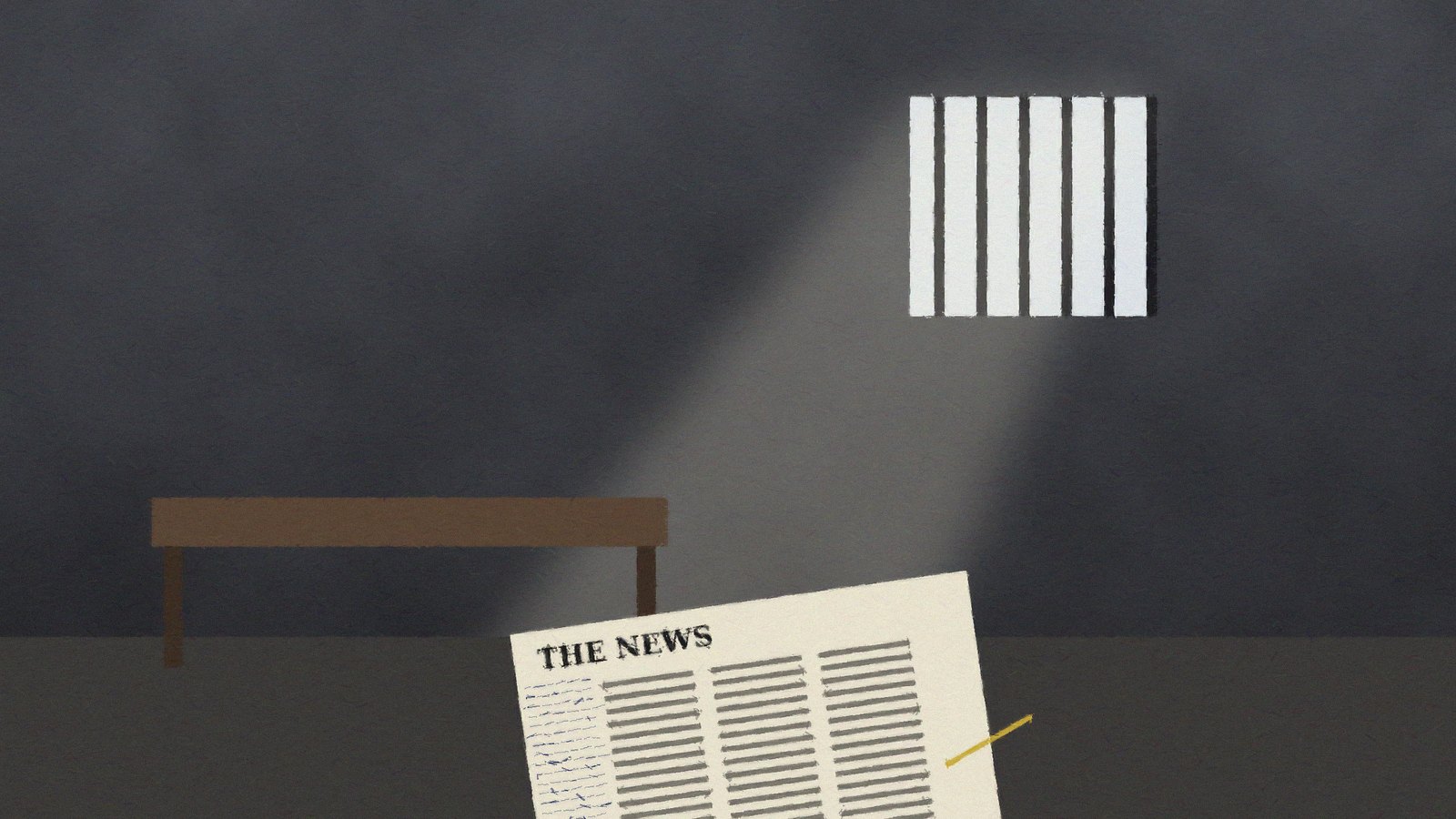
A letter in the margins of the newspapers
In April 1963 the Reverend Martin Luther King Jr. was arrested in Birmingham, Alabama, for leading a peaceful march against segregation in defiance of a court injunction.
In his cell a newspaper reached him that carried a statement signed by eight white clergymen of the city. They were not open racists but “moderates”. They called the demonstrations “unwise and untimely” and urged Black citizens to be patient and wait for the courts.
King did not have enough paper. He began writing his reply in the margins of that very newspaper, then on scraps his lawyers smuggled in. The result became one of the most famous texts of the twentieth century: the “Letter from Birmingham Jail”.
He wrote that he had heard the word “Wait!” all his life, and that “Wait” had almost always meant “Never”. He wrote that the greatest stumbling block to freedom was not the open bigot but the moderate who prefers the absence of tension to the presence of justice.
King was not calling for violence. He was calling for injustice to be pushed back now, by peaceful means, rather than to have the push postponed to a time that never comes.
Source: Martin Luther King Jr., “Letter from Birmingham Jail”, 16 April 1963; the King Institute, Stanford University.
In the first two issues we read the law of pushing back in its fields and its instruments. In this issue we read it in people. The law does not operate in a vacuum; it runs through the hands of men and women who decide, at some moment, not to accept what others have accepted.
﴿ادْفَعْ بِالَّتِي هِيَ أَحْسَنُ فَإِذَا الَّذِي بَيْنَكَ وَبَيْنَهُ عَدَاوَةٌ كَأَنَّهُ وَلِيٌّ حَمِيمٌ﴾[فصلت: 34]
“Repel evil with what is better, and the one between whom and you there was enmity will become as though a devoted friend.” (Fussilat 41:34)
We chose King’s letter as our way in because it answers an objection every one who pushes back faces: why now? Why not be patient? His answer was that patience is a virtue when it is waiting for something that is coming, and a vice when it is a polite name for giving up. The verse at the head of this editorial commands the push and defines its character at once: “repel”, so no silence; “with what is better”, so no injustice in the push itself.
Why lives?
A life shows what theory does not. It reveals the personal cost of pushing back: prison, exile, lost work, isolation, and sometimes death. It also reveals that those who pushed back did not know the outcome when they decided. Ibn al-Nafis did not know that anyone would read his critique of Galen six centuries later, and Muhammad Ali did not know that the Supreme Court would vindicate him four years on.
Our method: lives, not eulogies
But we do not write eulogies. One of the gravest dangers to a life story is that it becomes an icon beyond criticism, and so loses its power to teach. That is why every life in this issue ends with a section called “The limits of the life”, in which we record what is held against its subject, what historians dispute, or what in the story has swollen into legend. The leader who freed a city may have sold those who could not pay their ransom; the brave resistance fighter may not have stopped his men from killing prisoners. Saying so does not diminish the life; it makes it human, and only the human can be followed.
In this issue
Ten lives from different centuries, faiths and continents. Three from our medieval Islamic history: Saladin, who recovered Jerusalem and showed mercy to its people; al-ʿIzz ibn ʿAbd al-Salam, who sold the emirs; and Ibn al-Nafis, who answered Galen. And seven from modern and contemporary history, Muslims and non-Muslims, men and women: Lalla Fatma N’Soumer in the Djurdjura mountains; Frederick Douglass, who escaped slavery by the book before the train; Ida B. Wells, who fought lynching with numbers; Marie Curie, who broke through the doors of science closed to women; ʿAbd al-Karim al-Khattabi in the Rif; Muhammad Ali, who lost his title but not his conscience; and Greta Thunberg, who sat alone outside her country’s parliament.
We have brought them together because they show that the law of pushing back knows no religion, race or sex. Whoever pushed back against injustice pushed it back, and whoever kept silent about it let it pass.