When People Walked: Organised Collective Pushing Back
An individual who refuses an injustice alone is punished. A community that refuses together, and organised, changes the law.
Editorial board
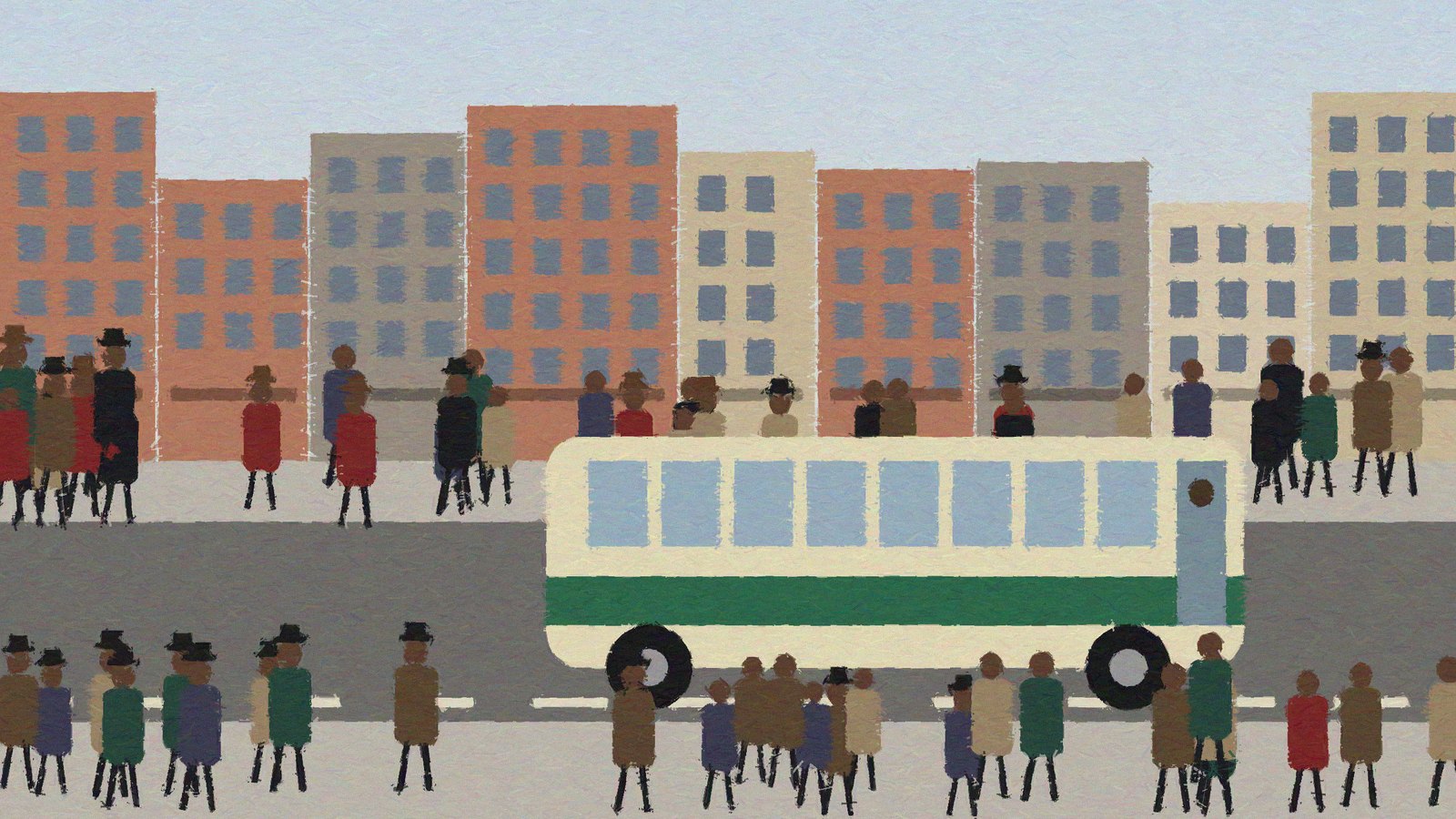
Three hundred and eighty-one days on foot
On the evening of 1 December 1955 a Black seamstress in Montgomery, Alabama, named Rosa Parks refused to give up her seat on a bus to a white passenger, as segregation laws required. She was arrested.
Rosa was not the first to do so. But this time the community was ready. Just four days later, on the morning of 5 December, the city’s Black residents stopped riding the buses. They made up about three quarters of the riders.
Many thought the boycott would collapse within days, since people needed to get to work. But the organisers, led by a twenty-six-year-old pastor named Martin Luther King Jr., built a network of volunteer cars carrying people between fixed points, and Black taxi drivers cut their fares to ten cents, the price of a bus ticket. When the city pressed insurers to cancel coverage on the volunteer cars, the organisers insured them with Lloyd’s of London. Thousands of people walked miles to work every day.
The boycott lasted three hundred and eighty-one days. Meanwhile a case was filed in federal court, until on 13 November 1956 the Supreme Court upheld a ruling that segregation on buses was unconstitutional. On 20 December 1956 people went back to the buses, sitting wherever they chose.
Source: Records of the Montgomery Improvement Association; Browder v. Gayle (1956); the Martin Luther King Jr. Research and Education Institute, Stanford University.
The boycott is one of the oldest instruments of social pushing back, and one of the most often failed. Most boycotts begin with enthusiasm and melt away within weeks. The question Montgomery answers is not “is the boycott legitimate?” but “why did this boycott succeed where others failed?”
﴿وَتَعَاوَنُوا عَلَى الْبِرِّ وَالتَّقْوَىٰ ۖ وَلَا تَعَاوَنُوا عَلَى الْإِثْمِ وَالْعُدْوَانِ﴾[المائدة: 2]
“Cooperate in righteousness and piety, and do not cooperate in sin and aggression.” (Al-Maʾida 5:2)
Our project holds that pushing back is a descriptive law and cooperation a normative principle. Montgomery is a rare example of the two meeting: the contest with the city was possible only because cooperation among the boycotters was solid.
The collective action problem
The American economist Mancur Olson described, in “The Logic of Collective Action” (1965), a problem every group knows: everyone benefits if the shared action succeeds, but each individual on their own is tempted to leave the cost to others. Why should I walk miles in the rain, when the result will come or not come with or without my walking?
Montgomery solved this problem in three ways. First, it lowered the cost to the individual: the car network and the ten-cent fares made the boycott possible for those who could not walk long distances. Second, it made commitment visible and shared: weekly church meetings renewed resolve and made withdrawal something people would notice. Third, it had organised leadership that negotiated, planned and solved daily problems, not merely orators who stirred people up.
The double track
Another lesson is missing from many protest campaigns: the decision did not come from the street alone. While the boycott was draining the bus company financially, the case of Browder v. Gayle was making its way through the courts. What finally ended segregation was the Supreme Court’s ruling. But the boycott kept the case alive and made the city pay for its stubbornness the whole way. The street without the law wears itself out; the law without the street is postponed.
Boycotts today
Contemporary boycotts, many of them now run through social media, raise the same question. Announcing a boycott has become very easy, but that very ease may be a weakness, because what is easy to start is easy to abandon. A boycott that truly wants to push back needs what Montgomery needed: practical alternatives that lower the cost, organisation that keeps commitment alive, specific demands that can be measured and met, and a parallel institutional track that turns pressure into a lasting result.
Montgomery’s strength was not in people’s anger, but in their ability to be angry together for three hundred and eighty-one days.