The Oil Weapon: A Push That Roused the Pushed
When one side uses its resource as a weapon, it wins a round and, at the same time, starts a race to do without it.
Editorial board
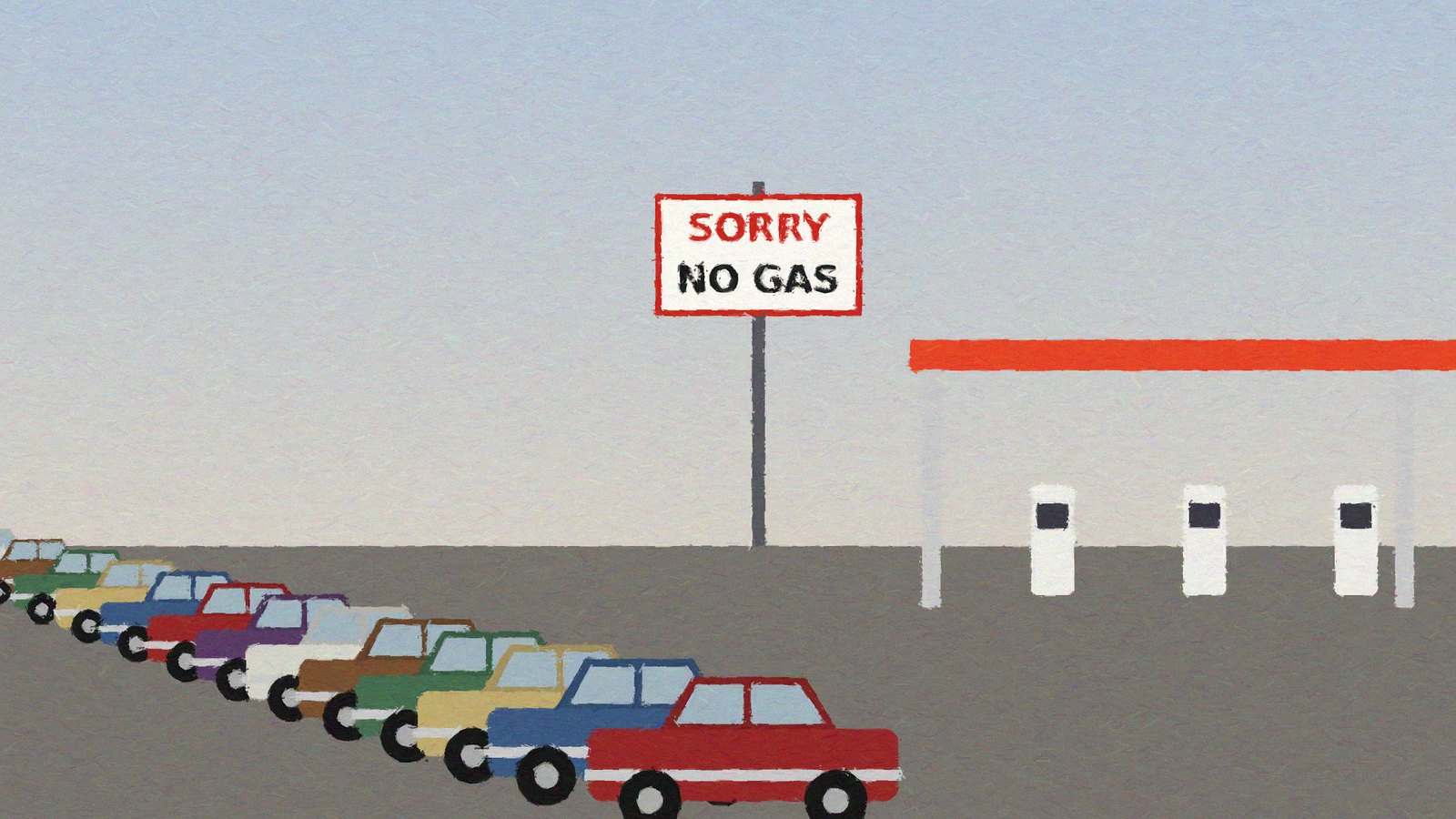
Queues in the land of the automobile
On 6 October 1973 war broke out between Egypt and Syria on one side and Israel on the other. Days later, when the United States began an airlift to arm Israel, the Arab oil-exporting states decided to use a weapon never before used on this scale: they announced production cuts and imposed an embargo on oil exports to the United States, the Netherlands and other countries.
Before the crisis a barrel cost about three dollars. By early 1974 it cost about twelve, roughly quadrupling in a few months.
In America, the land of big cars and cheap fuel, cars lined up in long queues at petrol stations, and many stations hung signs saying “Sorry, no gas.” Some states rationed sales by licence plate, odd numbers one day and even the next. European countries closed their roads on Sundays.
The embargo ended in March 1974. But the world that came out of it was not the world that went in.
Source: Office of the Historian, US Department of State; US Energy Information Administration; Daniel Yergin, “The Prize” (1991).
The 1973 embargo was the clearest use in modern history of an economic resource as an instrument of political pushing back. In the short term it succeeded remarkably: it shocked the industrial economies, transferred enormous wealth to the exporting states and forced Western capitals to recalculate their policies in the region. But its real value shows when we follow what happened next.
﴿ذَٰلِكَ بِأَنَّ اللَّهَ لَمْ يَكُ مُغَيِّرًا نِعْمَةً أَنْعَمَهَا عَلَىٰ قَوْمٍ حَتَّىٰ يُغَيِّرُوا مَا بِأَنْفُسِهِمْ﴾[الأنفال: 53]
“That is because God would not change a blessing He had bestowed upon a people until they change what is within themselves.” (Al-Anfal 8:53)
The counter-push
The rule we have seen in every field is that pushing back rouses the one who is pushed. That is exactly what happened. In November 1974 the industrial nations founded the International Energy Agency to coordinate their response to any future embargo. In 1975 the US Congress passed a law creating a Strategic Petroleum Reserve and imposing the first mandatory fuel-economy standards for cars. France expanded nuclear power until it became its main source of electricity. Exploration accelerated in the North Sea, Alaska and elsewhere outside the region.
Not all of this was the effect of the 1973 embargo alone; a second crisis came in 1979. But the direction was clear: every dollar the embargo added to the price of a barrel was an incentive for importers to do without that barrel. In the mid-1980s prices collapsed, and the exporting states found that the weapon that had shaken the world a decade earlier had lost much of its edge.
When does the effect of an economic push last?
Economics teaches that the power of any economic pressure depends on how hard it is to do without what is withheld. That difficulty is greatest in the short run and diminishes over time, because those cut off look for alternatives and develop them. An economic weapon is, by its nature, a weapon that wears down the more it is used.
Here the verse speaks to our context. A blessing is not taken away at random; it changes as what is within people changes in how they manage it. The wealth that flowed into the region after 1973 was a historic opportunity to build a capacity that would not vanish with the price of oil: education, industry, scientific research and institutions. Some states invested part of it well, and others squandered much of it. That story deserves an article of its own in a future issue.
In sum
An economic push wins the first round easily, because the adversary was not prepared. But it teaches the adversary to prepare. Whoever wants the effect of their push to last must turn the gain of the moment into lasting capacity before the other side adapts. Whoever relies on the weapon alone has won a battle and started a race they may not win.