Frederick Douglass: From Slavery to the Podium
He escaped slavery twice: once by train, and years earlier by a book he taught himself to read in secret.
Editorial board
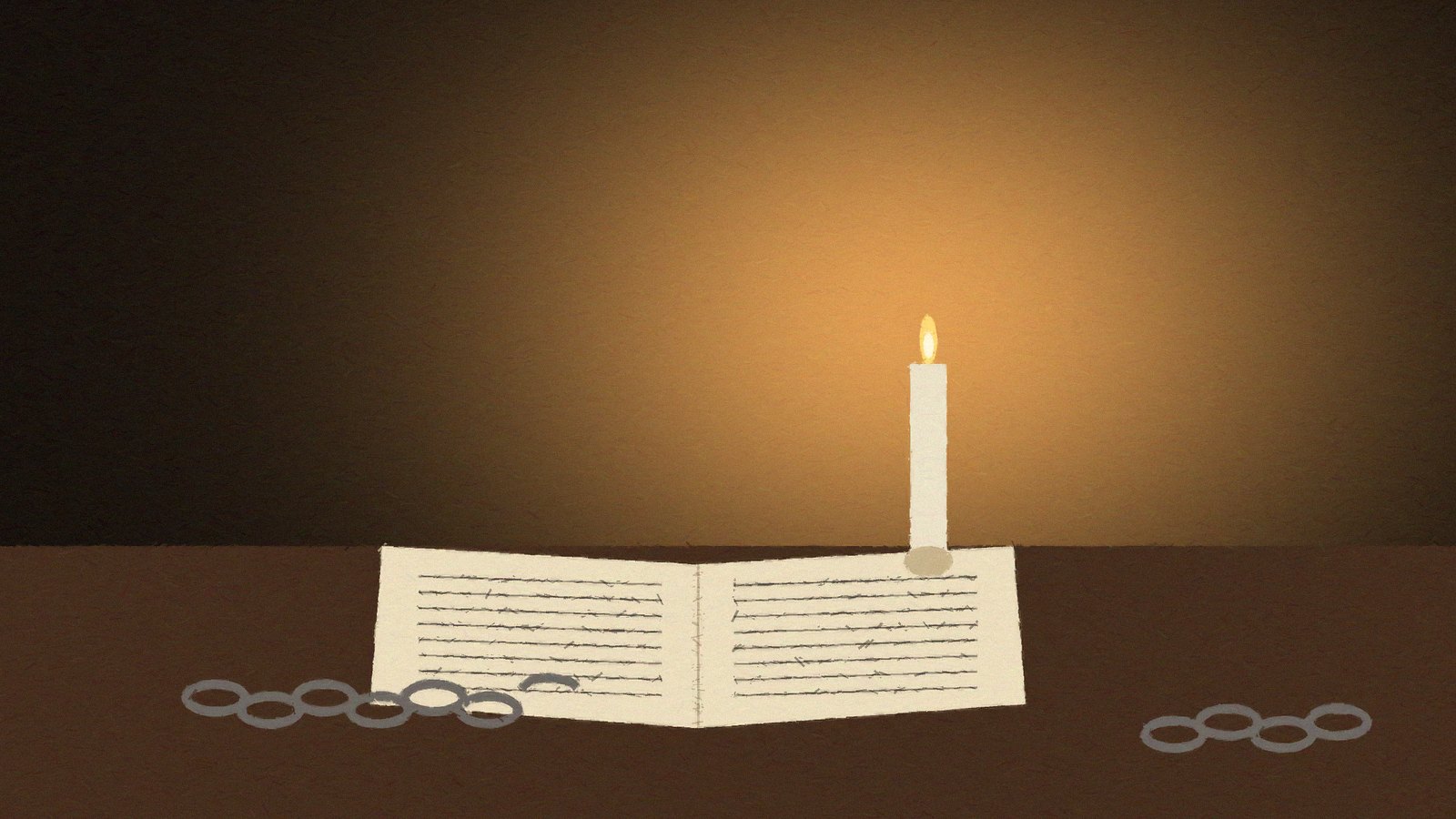
The lesson the master forbade
Frederick Douglass was born a slave in Maryland around 1818. He did not know his birthday, did not know his father, and saw his mother only a few times, at night.
When he was about twelve he was sent to serve in a household in Baltimore. The mistress of the house, Sophia Auld, began teaching him the alphabet. When her husband, Hugh Auld, found out, he was angry and stopped her, saying that teaching a slave to read would spoil him as a slave for ever, because it would make him discontented with his condition.
The boy heard this and understood from it what the master had not meant. He wrote years later that in that moment he grasped that the road from slavery to freedom ran through reading. So he learned in secret: trading bread with white children in the neighbourhood for lessons in letters, and reading whatever books and newspapers came into his hands.
At sixteen he was sent to a man notorious for “breaking” rebellious slaves, Edward Covey. Covey beat him again and again, until one day Douglass decided to resist. They fought for two hours, and Covey never beat him again. Douglass wrote of that day: “You have seen how a man was made a slave; you shall see how a slave was made a man.”
On 3 September 1838 he escaped by train from Baltimore, disguised as a sailor, and reached New York a free man.
Source: Frederick Douglass, “Narrative of the Life of Frederick Douglass, an American Slave” (1845).
After his escape Douglass became the most famous orator of the American abolition movement, published a newspaper, wrote three autobiographies, and held public office after the Civil War. But what concerns us in his life is the order of things: how pushing back began inside and then went out into the world.
﴿إِنَّ اللَّهَ لَا يُغَيِّرُ مَا بِقَوْمٍ حَتَّىٰ يُغَيِّرُوا مَا بِأَنْفُسِهِمْ﴾[الرعد: 11]
“God does not change the condition of a people until they change what is within themselves.” (Al-Raʿd 13:11)
Three stages of pushing back
We see three successive stages in Douglass’s life. The first was inward: reading. He understood from his master’s words that slavery rested on keeping the slave ignorant of his condition, and that whoever knew his condition would not accept it. Reading became his first instrument of pushing back, before he had any other. The second was physical: the fight with Covey. He decided he would no longer accept beatings, even if it cost him his life. This is the moment when inner conviction turns into action. The third was public: after his escape Douglass became a voice for the millions who had not escaped. He wrote his life story in 1845 with real names and real places, though it exposed him to the danger of recapture, until he had to travel to Britain, where his supporters raised money to buy his legal freedom in 1846.
The word against politeness
On 5 July 1852 Douglass was invited to speak at an Independence Day celebration in Rochester. He stood before an audience of white abolitionists and asked them: what, to the slave, is the Fourth of July? He answered that it revealed to him, more than any other day, the injustice of which he was the victim. He did not flatter his hosts; he used their occasion to push them to see their own contradiction. This is one of the hardest forms of pushing back: pushing your allies, not only your opponents.
The limits of the life
Douglass was a pragmatist in politics, and some comrades criticised him when he broke with William Lloyd Garrison’s camp, which saw the US Constitution as a pro-slavery document; Douglass came to argue that the Constitution could be read against slavery and used to abolish it. He was also criticised later for backing the Republican Party at times when the party had abandoned the protection of Black rights in the South. Historians differ over these positions, some seeing wise pragmatism and others concession. But no one disputes that the man born without a name or a birthday became one of the greatest writers on freedom in the English language.