Lalla Fatma N’Soumer: The Lady of the Djurdjura
A woman of about twenty led the men of the Kabyle mountains against one of the strongest colonial armies of her day, and her enemies called her “the Joan of Arc of the Djurdjura”.
Editorial board
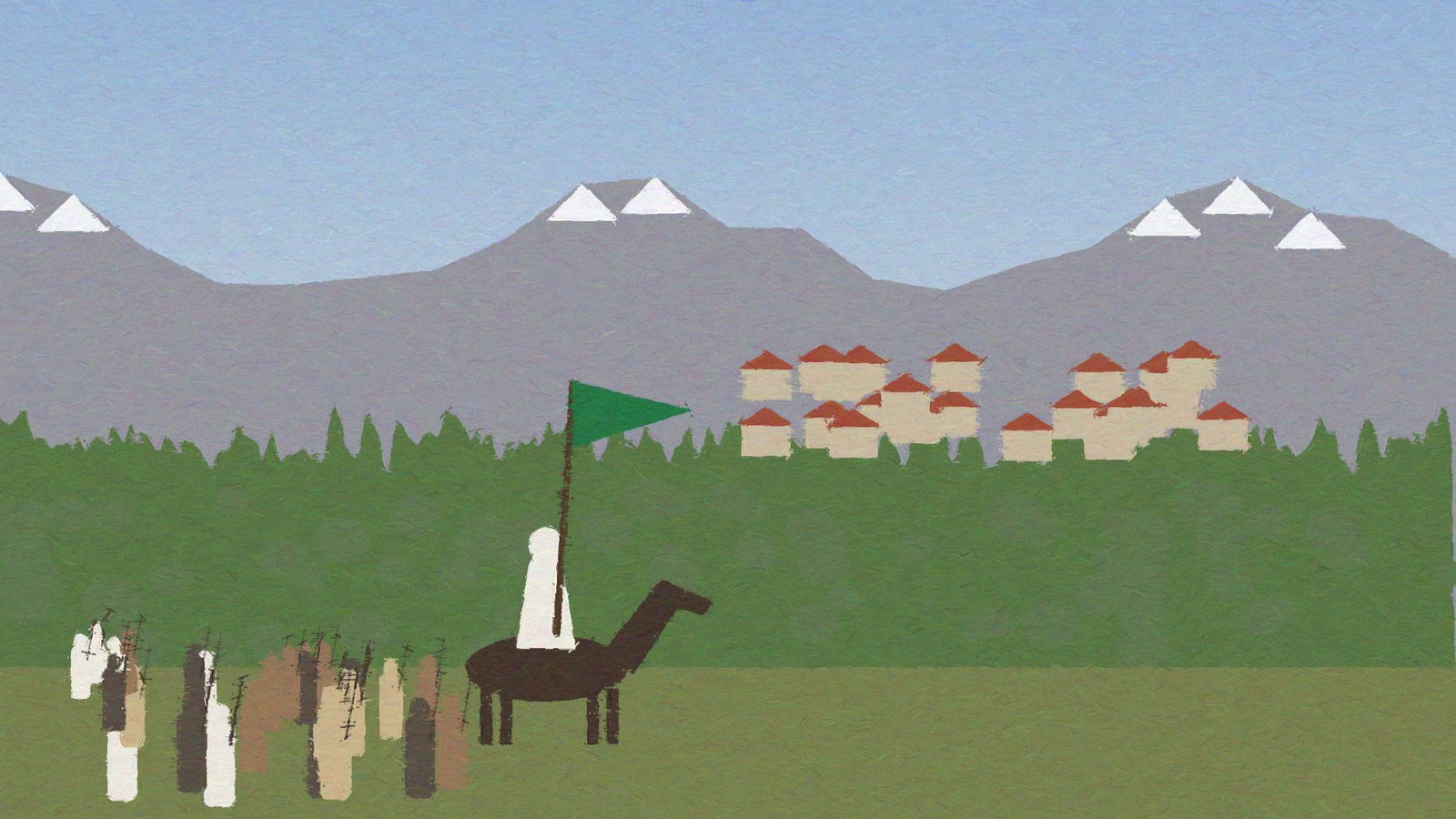
The last mountain
The French occupation of Algeria began in 1830. Two decades later France had subdued most of the plains and cities, but the Djurdjura mountains in Kabylia still held out.
In those mountains, in a village near Soumer, grew up a girl named Fatma, daughter of a sheikh who ran a zawiya of the Rahmaniyya Sufi order. She learned the Quran and the religious sciences, which most women of her time could not. She was married young, did not accept the marriage, and returned to her father’s house; her husband refused to divorce her.
When resistance flared in the region around 1849, she joined it. In 1850 she and her brother took command of the volunteers in the Soumer area. In 1854 her forces helped repel the French at the Sebaou valley, and with the Sharif Boubaghla she won the battle of Tachekkirt.
The resistance went on for years, until a major French campaign came in 1857. On 11 July 1857 Lalla Fatma was captured and taken to the camp of Marshal Randon. She was imprisoned at Tablat and died there in 1863, aged about thirty-three.
In October 1994 her remains were moved to El Alia cemetery in Algiers, where the country’s heroes are buried.
Source: Studies of Algerian popular resistance; archives of the French campaigns in Kabylia. Sources on her life are few, and much of what is told about her comes from oral tradition.
In the military history of colonialism, mountains always resist longer than plains. But a mountain does not resist by itself. It needs someone to gather the people and convince them that pushing back is possible. In the Djurdjura that task fell to a woman.
﴿وَلَوْلَا دَفْعُ اللَّهِ النَّاسَ بَعْضَهُمْ بِبَعْضٍ لَفَسَدَتِ الْأَرْضُ وَلَٰكِنَّ اللَّهَ ذُو فَضْلٍ عَلَى الْعَالَمِينَ﴾[البقرة: 251]
“And were it not for God repelling some people by means of others, the earth would have been corrupted; but God is full of bounty to all the worlds.” (Al-Baqarah 2:251)
Sources of leadership
Lalla Fatma’s leadership did not come from nowhere. Three sources of authority in her society came together in her. The first was religious: she was the daughter of a Rahmaniyya zawiya, and the Rahmaniyya order was one of the strongest social networks in Algeria; it would later lead the great revolt of 1871. The second was learning: she was educated in a society where education was scarce. The third was personal: a reputation for piety and wisdom that made people seek her out. The woman who led men did not break her society’s structure; she used the sources of authority within it.
Resistance that buys time
Lalla Fatma did not win in the end. The military balance was too lopsided for courage to make up. But the value of her push is not measured by its immediate result alone. She delayed the subjugation of the region for years and made the occupier pay a high price, and most importantly she left a memory. Resistance that is defeated is not the same as surrender. The first leaves later generations certain that pushing back is possible; the second leaves them certain it is impossible. When the Algerian revolution broke out nearly a century later, names like Lalla Fatma were part of the memory that fed it.
The limits of the life
Written sources on Lalla Fatma are few, most of them French and written by her enemies, and much of what is told about her comes from the oral tradition of Kabylia. So we should distinguish what is established, such as her leading role, her capture and her death in prison, from what has swelled in the retelling, such as the details of battles and her sayings. The French name for her, “the Joan of Arc of the Djurdjura”, says more about the French view than about her; it reads her through their frame of reference, not hers.
Yet what is established is enough: a woman in the mountains, in the middle of the nineteenth century, who refused to accept what others had accepted, gathered people to push back, and paid for it with her freedom and her life.