ʿAntara ibn Shaddad: The Slave Freed by His Sword
His father did not acknowledge him because his mother was an Abyssinian slave. When enemies raided his people, his father said: charge, ʿAntara. He replied: a slave is no good at charging. His father said: charge, and you are free.
Editorial board
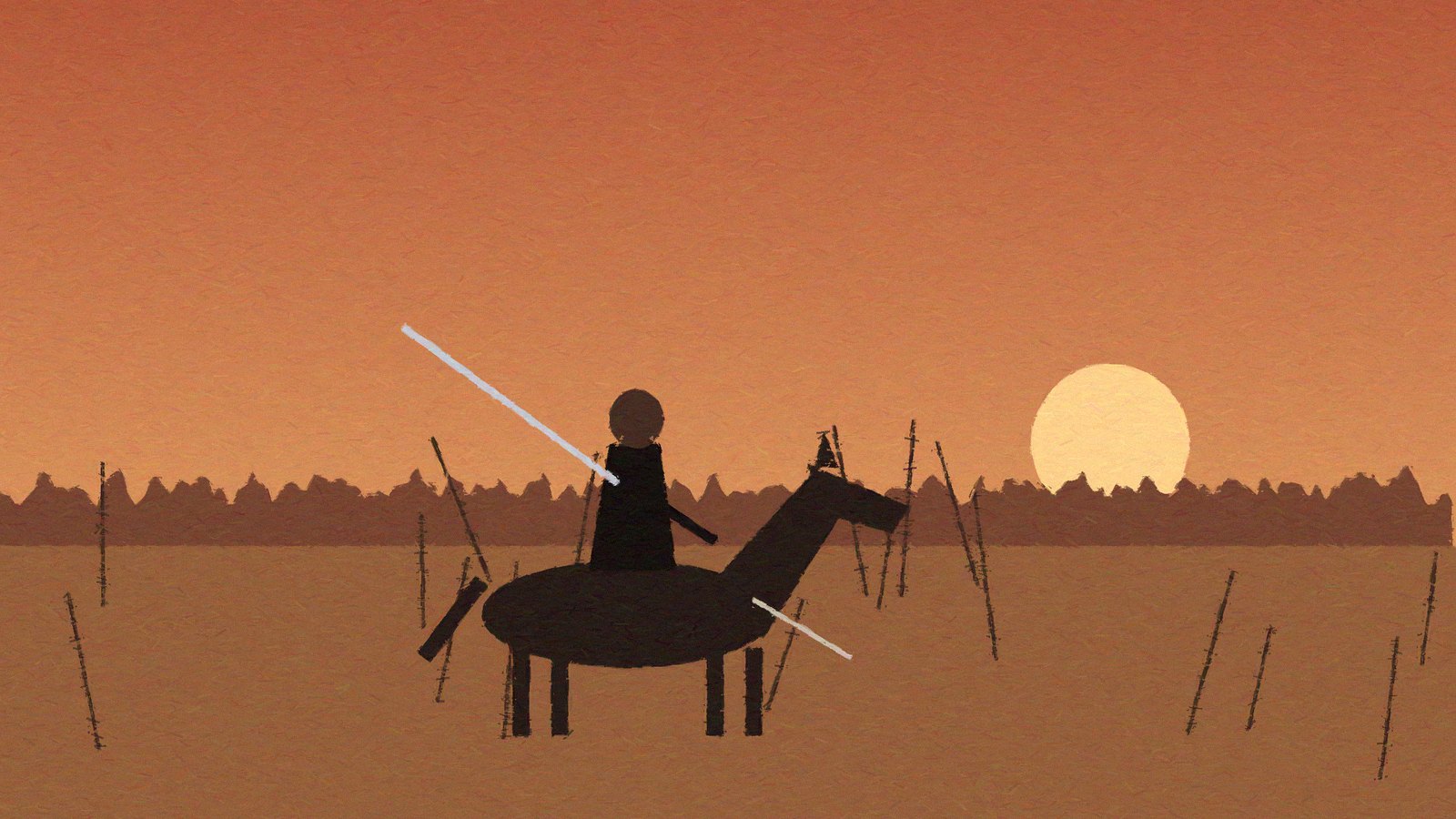
“Charge, and you are free”
ʿAntara was the son of Shaddad al-ʿAbsi, one of the chiefs of Banu ʿAbs, and of an Abyssinian slave woman named Zabiba. Arab custom was that the son of a slave woman was attached to his father’s lineage only if the father acknowledged him; otherwise he stayed a slave, herding camels and serving. His father did not acknowledge him.
ʿAntara loved his cousin ʿAbla, and could not ask for her hand while he was a slave.
The reports say a group of Arabs raided Banu ʿAbs and drove off their camels. The ʿAbsis pursued and fought them, with ʿAntara among them. His father said: charge, ʿAntara. ʿAntara answered: a slave is no good at charging; he is good only at milking and binding the udders.
His father said: charge, and you are free.
ʿAntara charged and fought fiercely until he recovered the camels. His father acknowledged him and attached him to his lineage. He became one of the most famous horsemen of the Arabs; it was said he was the bravest man of the Jahiliyya.
Source: Abu al-Faraj al-Isfahani, “Kitab al-Aghani”; Ibn Qutayba, “al-Shiʿr wa al-Shuʿaraʾ”. Many reports about ʿAntara became mixed with the popular epic written about him centuries later.
ʿAntara is the Muʿallaqa poet closest to the lives we read in the third issue. His is the story of a man born into a lower place by the customs of his society, who pushed that place off himself until he wrung recognition from society. In that he resembles Frederick Douglass, who escaped slavery after resisting the man who beat him.
First axis: the abode asked to speak
هل غادرَ الشعراءُ مِن مُتردَّمِأم هل عرفتَ الدارَ بعدَ توهُّمِيا دارَ عبلةَ بالجِواءِ تكلَّميوعِمي صباحًا دارَ عبلةَ واسلَمي
Have the poets left any place unpatched? Or did you recognise the abode after long guessing?
O abode of ʿAbla at al-Jiwaʾ, speak; good morning, abode of ʿAbla, and be safe.
ʿAntara begins with a question about poetry itself: have the poets left any spot unpatched, anything left unsaid? The question shows an early awareness that the poet enters a crowded field and must find his place among those before him. It is the awareness of a slave who must find his place among the free.
Then he addresses ʿAbla’s abode, asks it to speak, and greets it. For him the ruins are not merely a trace of time but a trace of forbidden love. ʿAbla was the cousin he had no right to seek, and the abode he stands at belongs to one from whom a social custom, not time alone, kept him apart.
Second axis: the horse that complains
فازورَّ مِن وقعِ القَنا بلَبانِهِوشكا إليَّ بعَبرةٍ وتحمحُمِلو كانَ يدري ما المحاورةُ اشتكىولكانَ لو عَلِمَ الكلامَ مُكلِّمي
He swerved from the blows of the lances on his chest, and complained to me with a tear and a whinny.
Had he known what speech is, he would have complained; had he known words, he would have spoken to me.
These two lines are among the tenderest in pre-Islamic poetry. The horse carrying ʿAntara in battle swerves from the lances striking its chest and complains to its rider with tears and whinnying. Had it known how to speak, it would have complained and spoken.
This image holds something rare in poetry of boasting: an acknowledgement that pushing back has a price paid by someone other than the horseman. The horse suffers, and the poet sees its suffering and records it. This is a moral awareness different from ʿAmr ibn Kulthum’s banners that go in white and come out red without anyone asking who bled.
Third axis: the journey to freedom
ʿAntara’s journey in his ode is not a journey to the beloved’s abode but a journey to recognition. It contains the line that sums up his ethics of war:
يُخبِركِ مَن شهِدَ الوقيعةَ أنّنيأغشى الوغى وأعِفُّ عند المغنمِ
Whoever witnessed the battle will tell you that I plunge into the fray, and hold back at the spoils.
For one who reads through the lens of pushing back, this is among the most important lines in pre-Islamic poetry. ʿAntara joins two things rarely joined: daring in war and restraint at the spoils. He pushes back when pushing back is required, but does not make it a means of plunder. The difference between a fighter and a brigand lies exactly here.
In every issue we have established that the goal of legitimate pushing back is to prevent corruption, not to take everything. ʿAntara, the slave who knew what it meant to be denied his right, also knew not to take what was not his. It is as if the experience of deprivation taught him restraint.
What did ʿAntara push back?
The deeper question is: did ʿAntara push back injustice, or only push it off himself? He won his freedom by his courage, but the customs that enslaved him remained as they were. The other sons of slave women stayed slaves unless they had a sword like his. ʿAntara broke the rule for himself, not for others.
This is an important difference in social contention. The exceptional individual may win his place by his strength and so become proof that the customs are unjust, but he does not change them alone. Real change came later with Islam, which declared that “the most noble of you in the sight of God is the most righteous of you” (Al-Hujurat 49:13), and that Bilal the Abyssinian was a master. What ʿAntara won by the sword as an exception, Islam made the rule.
The limits of the reading
ʿAntara’s real life became mixed with the popular “Epic of ʿAntar” written centuries after him, full of exaggeration and legend. So we must distinguish what is in his Muʿallaqa from what is in the popular epic. The report “Charge, and you are free” appears in the old literary books, but its details vary. And some famous lines attributed to him, such as “I remembered you while the lances were drinking from me”, do not appear in every recension of the ode.
Issue contents: The Seven Muʿallaqat on the Scale of Pushing Back