ʿAmr ibn Kulthum: When Pushing Back Oversteps Its Limit
The king’s mother wanted to make his mother serve her, and his mother cried out: what humiliation! ʿAmr ibn Kulthum rose and killed the king in his own tent. Then he composed the ode that became the most famous poem of boasting in Arabic, and the most dangerous.
Editorial board
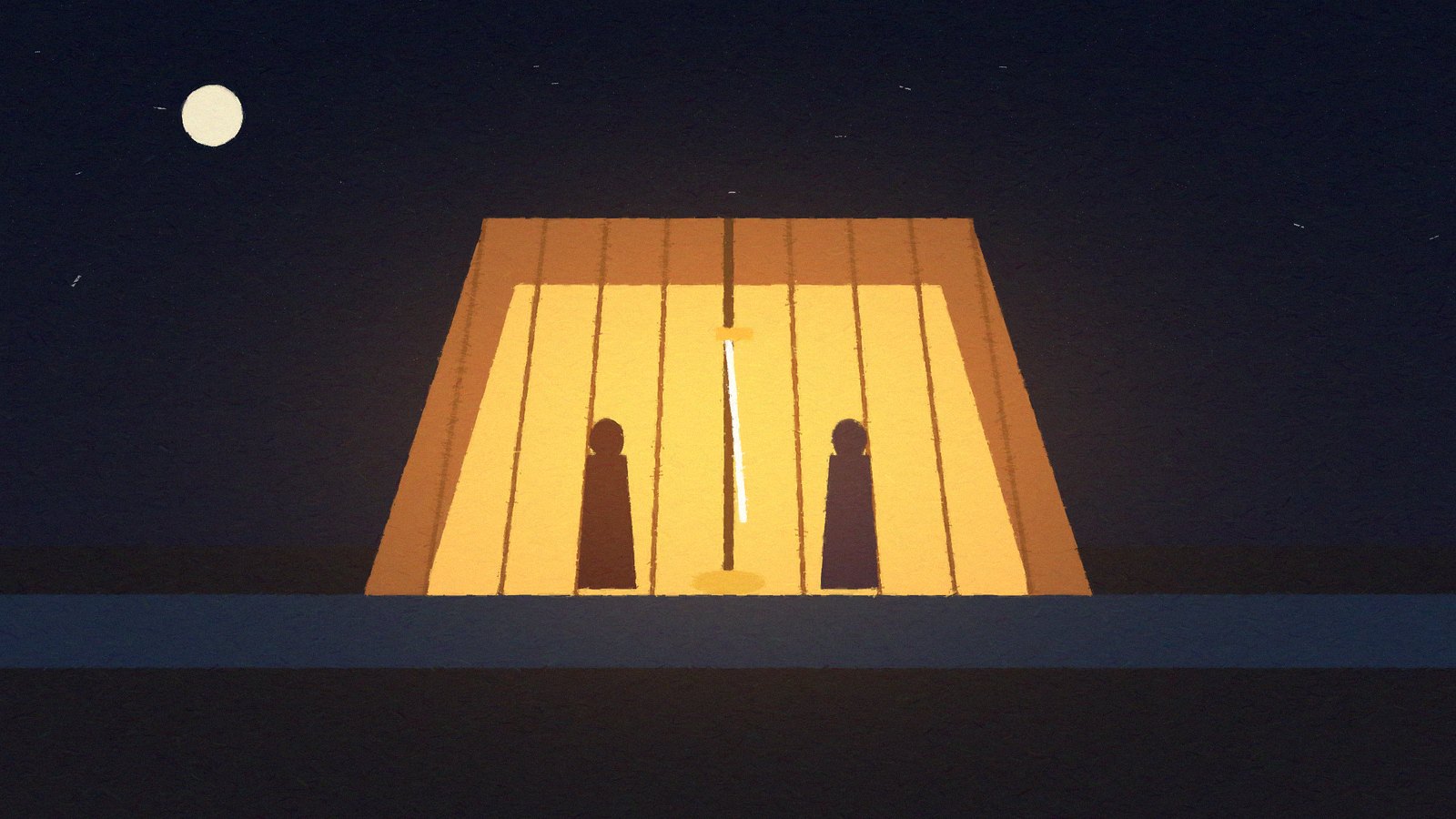
“What humiliation! To me, Taghlib!”
ʿAmr ibn Hind, king of al-Hira, was a tyrant. The reports say he once asked his companions: do you know any Arab whose mother would disdain to serve my mother? They said: yes, the mother of ʿAmr ibn Kulthum. Her father was Muhalhil ibn Rabiʿa, her uncle Kulayb Waʾil, her husband Kulthum ibn Malik, and her son ʿAmr the chief of his people.
So the king invited ʿAmr ibn Kulthum and his mother Layla bint al-Muhalhil to visit. A pavilion was pitched for them between al-Hira and the Euphrates, and the king told his mother Hind to dismiss the servants and then have Layla serve.
When they sat down, Hind said: Layla, hand me that dish. Layla replied: let the one who needs something get up and get it. Hind repeated it and insisted. Layla cried out: what humiliation! To me, Taghlib!
Her son ʿAmr heard her and the blood rose to his face. He looked at a sword hanging in the pavilion, the only sword there, took it down and struck ʿAmr ibn Hind on the head, killing him. He called to Banu Taghlib, who plundered the pavilion, and they set off for the Jazira.
Source: Abu al-Faraj al-Isfahani, “Kitab al-Aghani”; the commentaries on the Muʿallaqat by al-Zawzani and al-Tabrizi. The story is one of the well-known narrative reports.
ʿAmr ibn Kulthum’s Muʿallaqa is the most famous poem of boasting in Arabic. A poet of Bakr, Taghlib’s rivals, composed a line that reveals its effect on his people:
ألهى بني تغلبٍ عن كلِّ مَكرُمةٍقصيدةٌ قالها عمرو بنُ كلثومِ
Banu Taghlib were distracted from every noble deed by a poem composed by ʿAmr ibn Kulthum.
That is, Banu Taghlib kept reciting it and boasting of it until it kept them from doing new noble deeds. For all its satire, the line is a precise critique of what boasting can do to those who boast. That is why we read this ode in our issue as a counter-model: pushing back when it oversteps its limit.
First axis: no ruins, but wine
ألا هُبّي بصَحنِكِ فاصبَحيناولا تُبقي خُمورَ الأندَرينا
Come, rise with your bowl and pour us the morning draught, and leave nothing of the wines of al-Andarin.
This ode breaks the usual structure. ʿAmr does not begin by standing at the ruins, but by calling the cupbearer to pour wine in the morning. Only then does he come to the moment of farewell:
قِفي قبلَ التفرُّقِ يا ظعينانُخبِّركِ اليقينَ وتُخبِرينا
Stop before we part, O lady of the litter; we will tell you the truth, and you will tell us.
The absence of ruins means something. The poet who stands at the ruins acknowledges the power of time and weeps for what it erased. ʿAmr neither stops nor weeps. He begins with drinking and farewell, as if he acknowledged no power above his own. That prepares for what follows.
Second axis: banners instead of a mount
ʿAmr does not describe a camel or horse in detail as others did. His real mount is his whole tribe, and his instrument is its banners:
بأنّا نورِدُ الراياتِ بيضًاونُصدِرُهنَّ حُمرًا قد رَوِينا
We lead the banners in white, and bring them back red, having drunk their fill.
The banners enter battle white and leave it red, drenched with blood. The image is powerful, but it reveals a view of war radically different from Zuhayr’s. Zuhayr saw war as “blameworthy”; ʿAmr sees it as a source of pride.
Third axis: a journey beyond folly
Then comes the real journey, the speech’s journey from defence to threat:
أبا هندٍ فلا تعجلْ عليناوأنظِرْنا نُخبِّركَ اليقينابأيِّ مشيئةٍ عمرَو بنَ هندٍنكونُ لقَيلِكمْ فيها قَطينا
Father of Hind, do not be hasty with us; give us time, and we will tell you the truth.
By what will, ʿAmr ibn Hind, should we be servants to your underlings?
Up to here the speech is one of dignity: by what right, king, would you make us servants to your followers? That is legitimate pushing back. But the poem does not stop there:
ألا لا يجهلَنْ أحدٌ علينافنجهلَ فوقَ جهلِ الجاهلينا
Let no one act foolishly against us, or we will act more foolishly than the foolish.
This line is the key to the ode, and it holds a subtle lesson. “Jahl” in old Arabic does not mean only ignorance; it means rashness, aggression and the loss of forbearance. The poet says: whoever wrongs us, we answer with an aggression greater than his.
Here pushing back leaves its meaning. We established in the first issue that pushing back is displacement, not annihilation, and that it is measured by its outcome in balance. Folly beyond the folly of the foolish is not a push that restores balance but an escalation that breeds new folly. Had the opponent answered by the same logic, both would have entered a circle without end. That is exactly what we saw in the war of Dahis and al-Ghabraʾ, whose ending Zuhayr praised.
The boasting peaks in lines that leave reality behind:
إذا بلغَ الفِطامَ لنا صبيٌّتخِرُّ له الجبابرُ ساجدينا
When a boy of ours reaches the age of weaning, tyrants fall down before him in prostration.
Islam and folly
Islam came with the exact opposite of this logic. The Quran describes the servants of the Most Merciful as those who, “when the foolish address them, say: peace” (Al-Furqan 25:63). That does not mean surrendering to aggression; the Quran permitted pushing back. It means not being drawn down to the level of whoever wrongs you. Between “we will act more foolishly than the foolish” and “they say: peace” lies the distance between pre-Islamic pushing back and pushing back that Islam governed by justice.
The limits of the reading
We should not be unfair to the poet. The story of the insult to his mother, if true, makes his anger understandable, and defending a mother’s dignity is among the noblest of motives. We do not fault him for answering the insult; we note that his poem raised the logic of retaliation into a principle that oversteps the limits of pushing back. Some critics also read the line “Let no one act foolishly” as a deterrent threat more than a call to aggression: it tells others not to start with us, because the cost of starting is high. That reading brings it close to the logic of deterrence we read in the first issue. Both readings are possible, and the text allows them.
Issue contents: The Seven Muʿallaqat on the Scale of Pushing Back