Labid ibn Rabiʿa: All of Nature Pushes Back
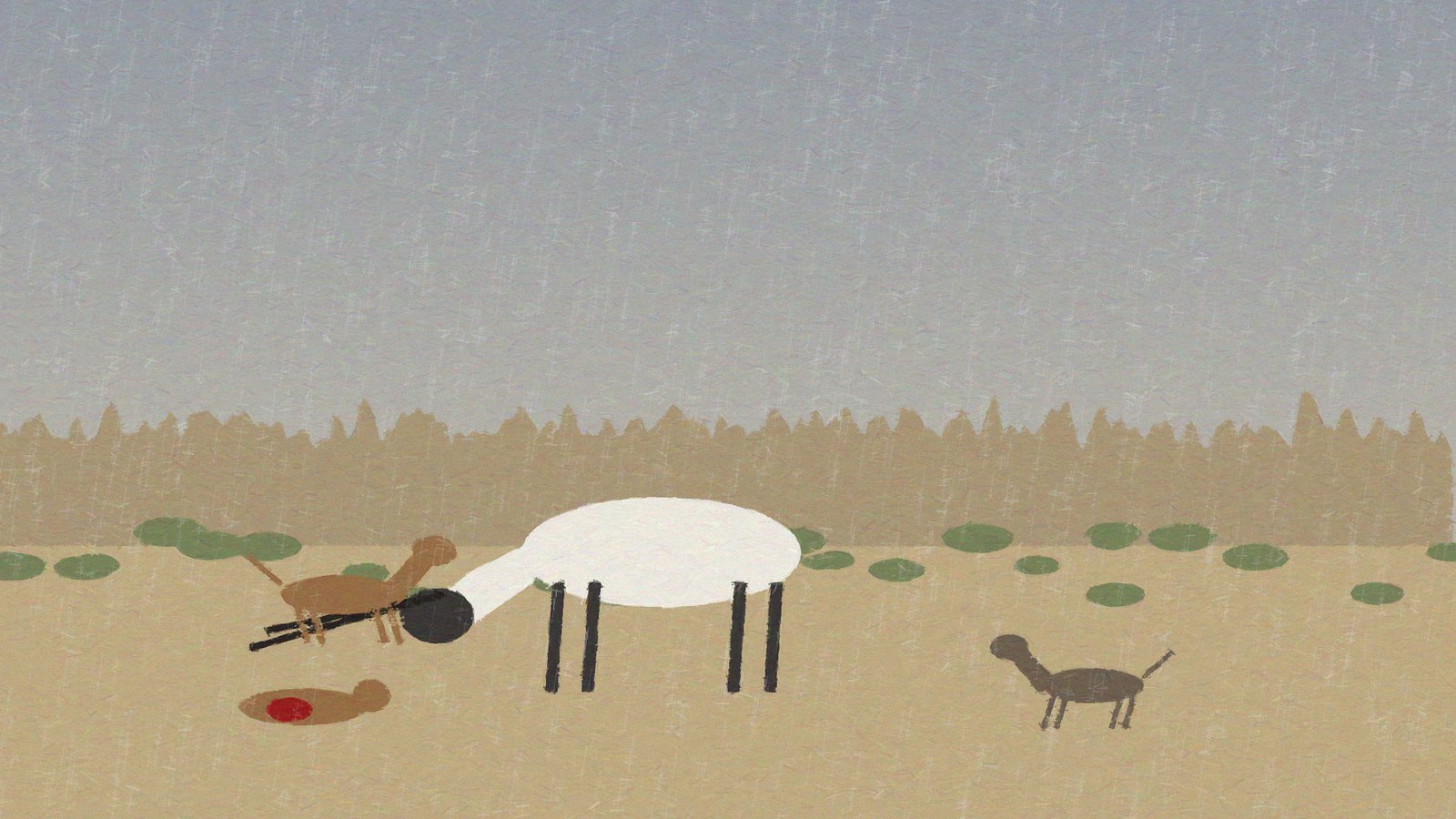
He lived long enough to reach Islam and embrace it, and then nearly gave up poetry. In his Muʿallaqa a wild cow loses her calf to wolves, then drives off the hunters’ dogs with her horns.
Editorial board
The poet who was content with the Quran
Labid ibn Rabiʿa was of the Banu ʿAmir ibn Saʿsaʿa, among the nobles, horsemen and generous men of his people. He lived a long life; the narrators say he passed a hundred.
Late in life he came with his tribe’s delegation to the Prophet, peace be upon him, and embraced Islam, and his Islam was sincere. The reports say he nearly stopped composing poetry after his conversion. When ʿUmar ibn al-Khattab asked him about his poetry, he said: God has given me in exchange for it Surat al-Baqara and Al ʿImran.
Before his Islam he had a line to whose truth the Prophet bore witness, as reported by al-Bukhari and Muslim: “The truest word a poet ever said is the word of Labid: Indeed, everything but God is vain.”
It is related that al-Farazdaq passed a mosque in Kufa and heard a man reciting a line of Labid’s Muʿallaqa, and prostrated. When asked about it he said: you know the prostration of the Quran, and I know the prostration of poetry.
Source: Sahih al-Bukhari, Book of the Merits of the Ansar, chapter on the Days of Ignorance; Abu al-Faraj al-Isfahani, “Kitab al-Aghani”. The story of al-Farazdaq is a literary anecdote.
Labid’s Muʿallaqa is the most nature-filled of the odes. It contains a scene that became one of the most famous in classical Arabic poetry: a wild cow searching for her calf, then facing the hunting dogs. Read through the lens of pushing back, it is a poem that sees the whole world, from torrent to wild beast to human being, in unceasing motion of pushing.
First axis: ruins in the torrent’s channels
عفتِ الديارُ محلُّها فمُقامُهابمِنًى تأبَّدَ غَولُها فرِجامُهافمَدافعُ الرَّيّانِ عُرّيَ رسمُهاخَلَقًا كما ضمِنَ الوُحيَّ سِلامُها
The abodes are effaced, their stopping-places and their dwellings, at Mina; Ghawl and Rijam have gone wild,
and the torrent-channels of al-Rayyan: their trace has been laid bare, worn, as rocks hold their inscriptions.
In the second line is a word that stops a reader of this magazine: “madafiʿ al-Rayyan”. The madafiʿ are the torrent channels down which water pushes from the mountain; the word comes from the very root of pushing back. The language here carries the meaning we are studying: the land bears the trace of pushing in its names. The torrent has laid bare the trace of the abodes, leaving it worn like writing carved in stone.
Then Labid returns to the same image in another line, among the most beautiful ever said about ruins:
وجلا السيولُ عن الطلولِ كأنّهازُبُرٌ تُجِدُّ متونَها أقلامُها
The torrents have cleared the ruins, so that they seem like books whose texts the pens are renewing.
Here the torrents do not erase the ruins; they clear them, uncovering what the sand had covered, so that they look like books whose lines the pens have renewed. This is the contention we saw in Imruʾ al-Qays’s line about the two winds: one force covers, another uncovers, and the trace survives between them.
Second axis: the camel and the wild cow
Labid describes his camel, then likens her speed to a wild cow. Then he forgets the camel and goes on with the cow’s story as if it were a poem within the poem. A snub-nosed cow has lost her calf and keeps circling and lowing in search of it:
خنساءُ ضيّعتِ الفَريرَ فلم يَرِمْعُرْضَ الشقائقِ طَوفُها وبُغامُهالِمُعفَّرٍ قَهدٍ تنازعَ شِلوَهُغُبسٌ كواسبُ لا يُمَنُّ طعامُها
A snub-nosed cow who lost her young calf; her circling and lowing never left the breadth of the sandy tracts,
for a white calf rolled in the dust, whose torn body grey wolves fight over, hunters whose food is owed to no one.
The calf has become a torn body in the dust, fought over by grey wolves who owe their food to no one, that is, who earn it themselves. The cow does not yet know what has happened and keeps searching. Then she spends a cold, rainy night, and in the morning the hunters surprise her with their dogs.
Third axis: the journey of pushing back
Here the scene reaches its climax. The cow that lost her calf, and fled at first, knows that if she does not push the dogs back she will die:
فتقصّدتْ منها كَسابِ فضُرِّجتْبدمٍ وغُودِرَ في المَكَرِّ سُخامُها
She went for Kasab among them, who was smeared with blood, and Sukham was left lying where she wheeled to charge.
She aimed at a bitch called Kasab and gored her with her horn until she was smeared with blood, and left another dog called Sukham felled where she had turned to charge.
This scene carries a lesson from the heart of pushing back. The cow is neither predator nor aggressor. She is a weak creature who has lost what she loves and is surrounded by a stronger force. Flight was her first choice. But when flight became impossible, pushing back became necessary. This is the rule the Quran would later lay down for human beings: “Permission is given to those who are fought against, because they have been wronged” (Al-Hajj 22:39). Permission to push back was given to the wronged, not the aggressor.
From “everything but God is vain” to Surat al-Baqara
Labid’s life holds a meaning that completes the reading of the ode. The poet who saw all of nature pushing against itself, and saw time erasing everything, concluded that everything but God is vain. Then he reached Islam and found in the Quran what made poetry unnecessary to him. It is no coincidence that the first sura he named was Surat al-Baqara, which holds the verse on which our project rests: “And were it not for God repelling some people by means of others, the earth would have been corrupted” (Al-Baqarah 2:251). It is as if Labid found in it the explanation of what he had described in his poetry decades earlier.
This connection, however, is our reflection, not a claim that Labid intended it.
The limits of the reading
Labid’s great age is probably among the exaggerated reports. The report that he gave up poetry after Islam is well known, but lines composed after his conversion are attributed to him. Some commentators take “Kasab” and “Sukham” as the dogs’ names and others as descriptions. And the order of the lines in the cow’s story differs slightly between recensions.
Issue contents: The Seven Muʿallaqat on the Scale of Pushing Back