Zuhayr ibn Abi Sulma: The War That Camels Put Out
The war of Dahis and al-Ghabraʾ lasted decades. Then two chiefs who had not fought in it paid the blood-money for the dead from their own wealth, and it went out. Zuhayr praised them in an ode that is the deepest thing said about war and peace before Islam.
Editorial board
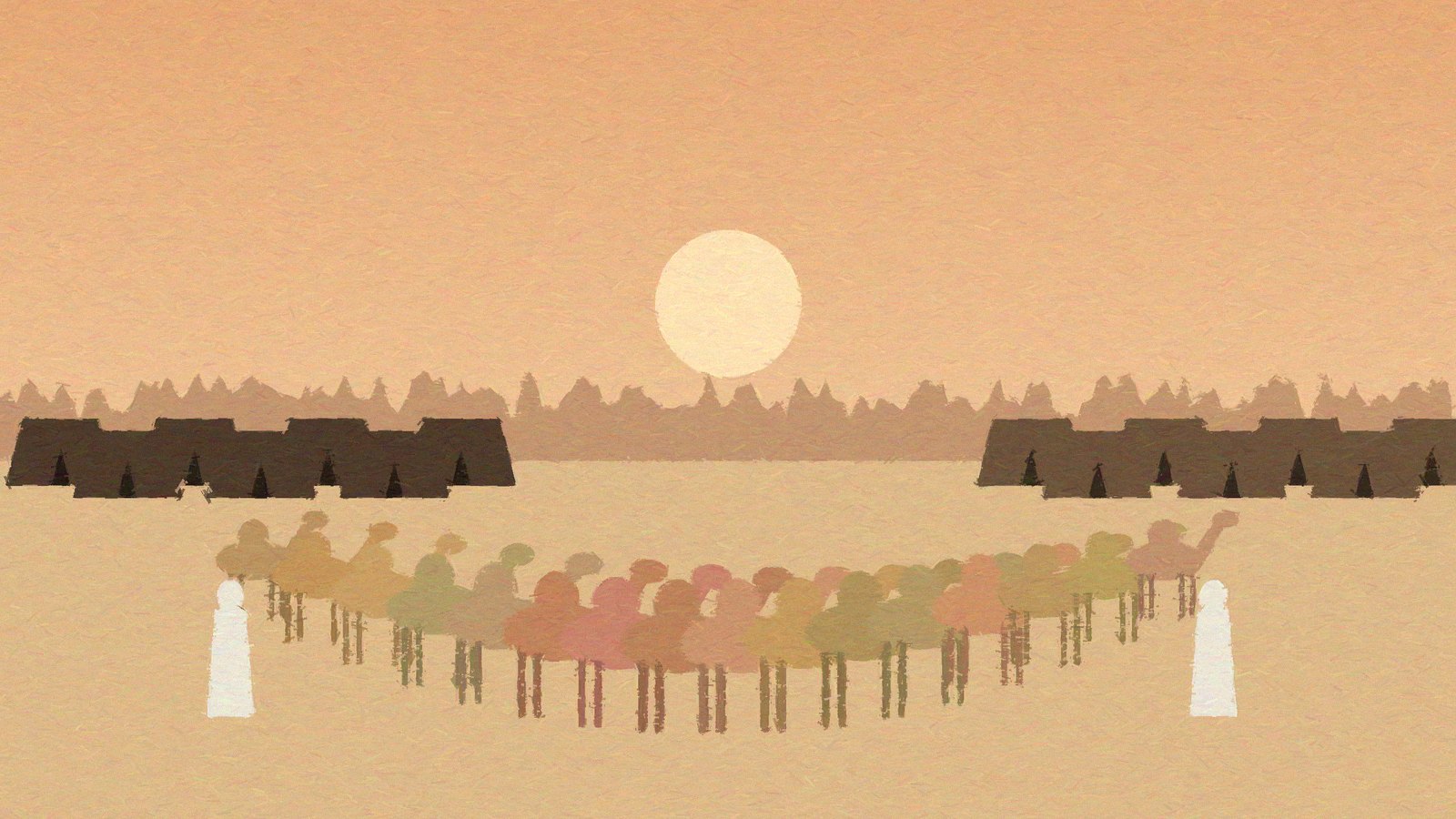
The horse race that lit a war
The reports say the war began with a race. Qays ibn Zuhayr, chief of ʿAbs, and Hudhayfa ibn Badr, chief of Dhubyan, wagered on two horses: Dahis for Qays and al-Ghabraʾ for Hudhayfa. On the day of the race men of Dhubyan lay in wait along the course and blocked Dahis, turning him aside until al-Ghabraʾ passed him. They quarrelled over the wager; then a man was killed, another was killed for him, and the circle widened.
The war between the two tribes lasted, the narrators say, about forty years, until it became the proverbial war without end, and both sides were worn down.
Then two chiefs of Banu Murra of Dhubyan, Harim ibn Sinan and al-Harith ibn ʿAwf, worked for peace. They were not among those who had started the war. But they saw that peace could not be made while the blood of the dead remained unsettled. So they took the blood-money for the dead upon their own wealth; the reports say it reached three thousand camels, paid over years.
Zuhayr ibn Abi Sulma was the poet of that region, and he praised them in his Muʿallaqa. It is said that Harim kept lavishing gifts on Zuhayr until Zuhayr was embarrassed before him.
Source: Abu al-Faraj al-Isfahani, “Kitab al-Aghani”; Muhammad Ahmad Jad al-Mawla et al., “Ayyam al-ʿArab fi al-Jahiliyya”. The number of camels and the length of the war come from narrative reports.
If the Muʿallaqa of Imruʾ al-Qays is the ode of revenge, Zuhayr’s is the ode of peace. It may be the closest of the Muʿallaqat to the spirit of our project, because in a single text it joins a description of war that does not beautify it, praise for those who put it out, and an acknowledgement that pushing back with arms is a necessity that cannot be dispensed with.
First axis: an abode after twenty years
أمِن أُمِّ أوفى دِمنةٌ لم تكلَّمِبِحَومانةِ الدَّرّاجِ فالمُتَثَلَّمِوقفتُ بها من بعدِ عشرينَ حِجّةًفلأيًا عرفتُ الدارَ بعدَ توهُّمِ
Is this a trace of Umm Awfa’s that does not speak, in the rough ground of al-Darraj and al-Mutathallam?
I stood there after twenty years, and only with effort, after long guessing, did I know the abode.
Zuhayr stands at Umm Awfa’s abode after twenty years and recognises it only with effort and guesswork. The trace “does not speak”: it does not answer his question. Silent ruins are a fitting overture for a poem about war: long time erases even the familiar, and long war erases people themselves. Zuhayr, whose life God lengthened, witnessed both.
Second axis: the litters instead of the mount
تبصَّرْ خليلي هل ترى من ظعائنٍتحمَّلْنَ بالعلياءِ من فوقِ جُرثُمِ
Look, my friend: do you see women’s litters setting out on the high ground above Jurthum?
Zuhayr does not describe his own camel, as Tarafa did, but the women’s litters on camelback as a people departs. The departure here is a community’s, not an individual’s. The difference is telling: Tarafa was an individual dispatching his cares on his camel; Zuhayr is the poet of a community watching it move. From its opening, the whole poem looks at things through the eyes of the tribe, not the individual.
Third axis: the journey of war and the journey of peace
The real journey in the ode is the two tribes’ journey from war to peace. Zuhayr begins it by praising the two peacemakers:
تداركتما عبسًا وذُبيانَ بعدماتفانَوا ودقّوا بينَهم عِطرَ مَنشِمِ
You two rescued ʿAbs and Dhubyan after they had worn each other out and pounded the perfume of Manshim between them.
“The perfume of Manshim” is an Arab proverb; its origin, it is said, is that a people perfumed themselves with the scent of a woman named Manshim and went out to war, and none of them returned. It became a symbol of ill omen. The image is of the two tribes exchanging destruction as people exchange perfume.
Then Zuhayr describes war as no one before him had:
وما الحربُ إلّا ما علمتمْ وذُقتمُوما هو عنها بالحديثِ المُرجَّمِمتى تبعثوها تبعثوها ذميمةًوتَضْرَ إذا ضرَّيتُموها فتَضرَمِ
War is nothing but what you have known and tasted; what is said of it is no idle guesswork.
Whenever you rouse it, you rouse it as a thing of blame; it grows fierce when you whet it, and it blazes.
War for him is not heroism or glory but something people have tasted and so know; no talk about it is needed. When roused it rises blameworthy, then burns ever hotter like fire as it is stoked. Nowhere in pre-Islamic poetry is there a description of war further from glorifying it.
The sage who does not despise arms
But Zuhayr was no naive preacher of peace. Among the wisdom lines that close the ode is one that states the opposite rule:
ومَن لم يَذُدْ عن حوضِهِ بسلاحِهِيُهدَّمْ ومَن لا يَظلمِ الناسَ يُظلَمِ
Whoever does not defend his cistern with his weapons will have it destroyed; and whoever does not wrong people will be wronged.
The first half states the law of pushing back plainly: whoever does not defend his cistern, his wealth and his domain, will be destroyed. The second half describes the law of the jungle the Arabs lived by; it is not a call to it. Some commentators understood it as a description of reality: people covet whoever does not inspire fear. This is the very distinction our project draws between description and standard. Zuhayr describes what happens; Islam would come after him to say what ought to: “Do not let hatred of a people lead you to be unjust” (Al-Maʾida 5:8).
Wealth instead of blood
The deepest lesson of the story is that peace did not come from kind words but from paying a real price. The unsettled blood was an obstacle that only blood-money satisfying the victims’ kin could remove. Two men who had not lit the war bore it. This is a model of conflict resolution we know today: peace needs someone to carry its cost, and the one who carries it is often a third party who judges that his financial loss is lighter than continued bleeding.
The Quran counts those who do this as peacemakers and gives them a share of zakat, the share of “those in debt” (Al-Tawba 9:60), who according to many jurists include those who took on debts to reconcile people.
The limits of the reading
Historians think the length of the war and the number of camels are likely exaggerated. Nor was the war continuous over all those years; it was a series of separate battle-days. The famous line “Whoever does not defend his cistern” is also transmitted with a slightly different wording, the order of the wisdom lines at the end of the ode varies between recensions, and some critics have doubted that all of them are Zuhayr’s.
Issue contents: The Seven Muʿallaqat on the Scale of Pushing Back